Last updated November 22, 2026
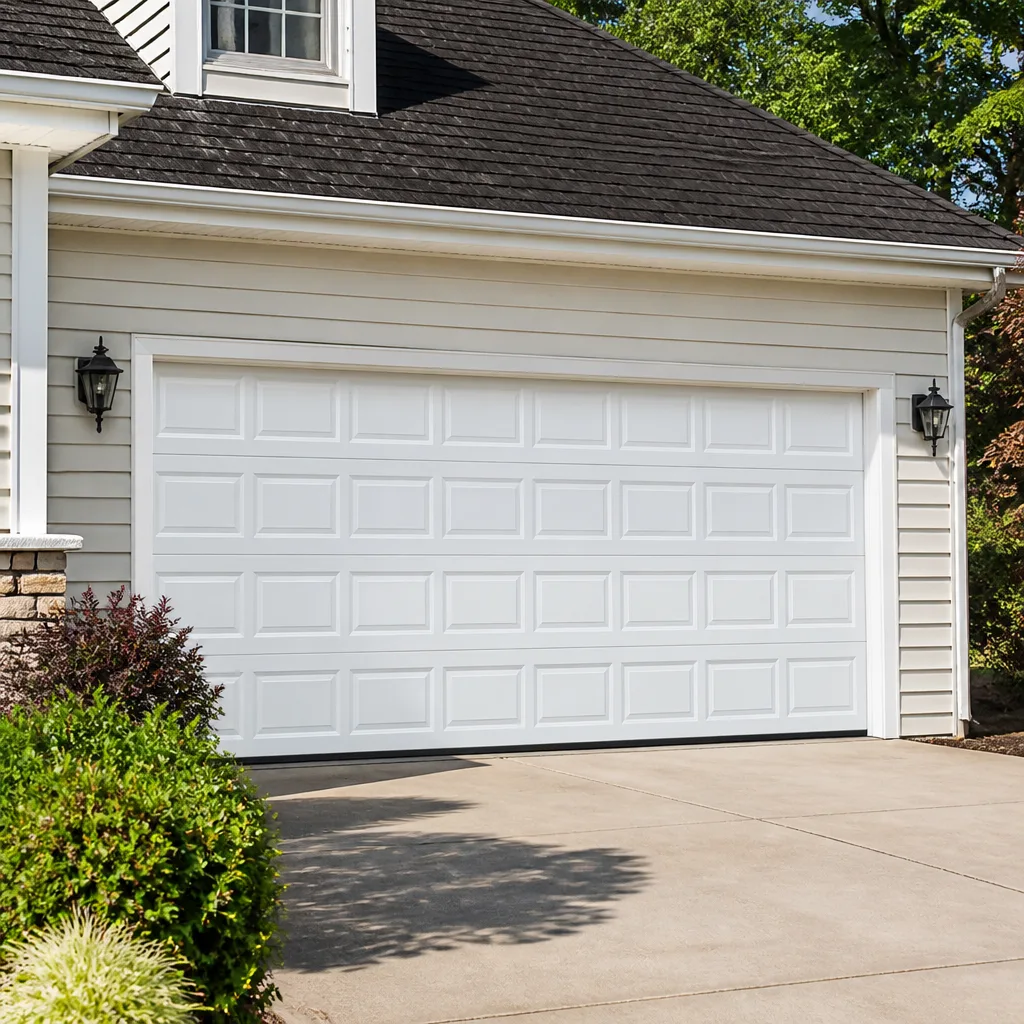 Raised-panel steel
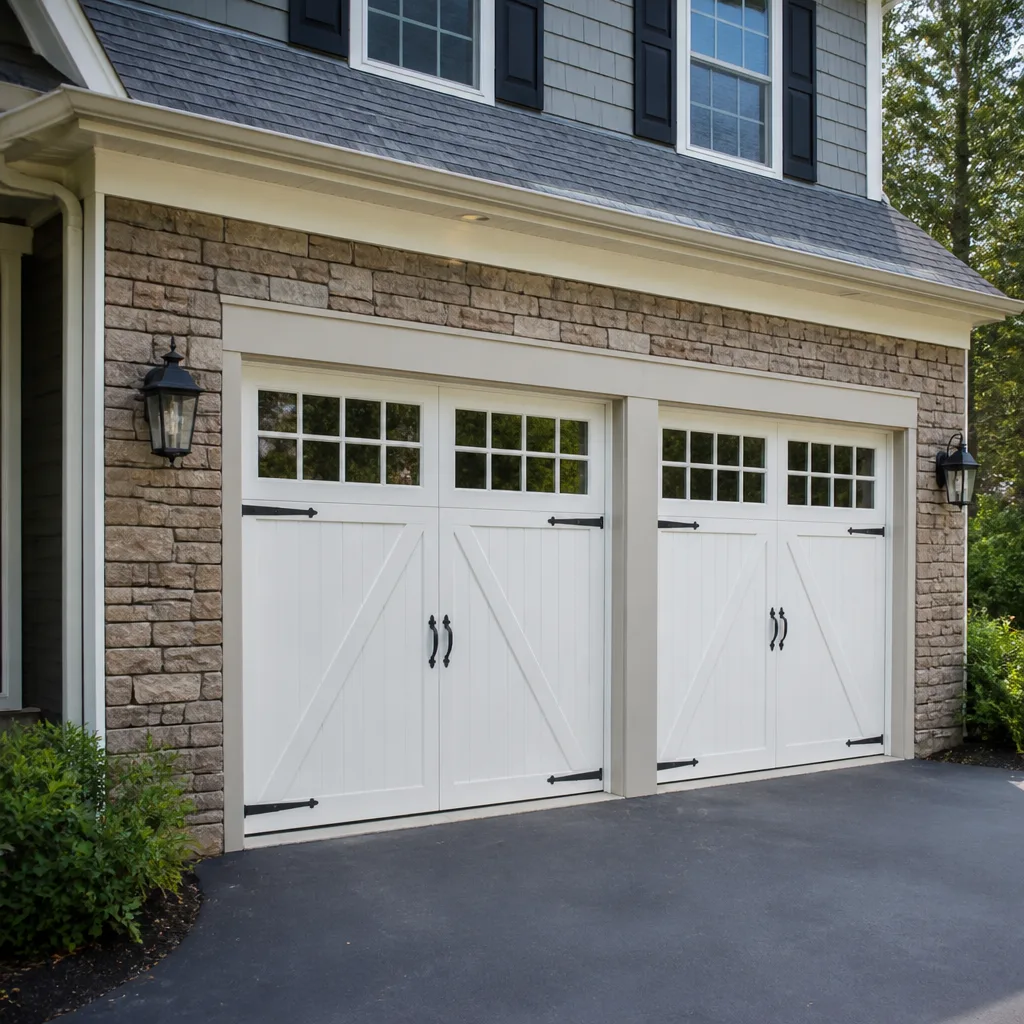 Carriage house
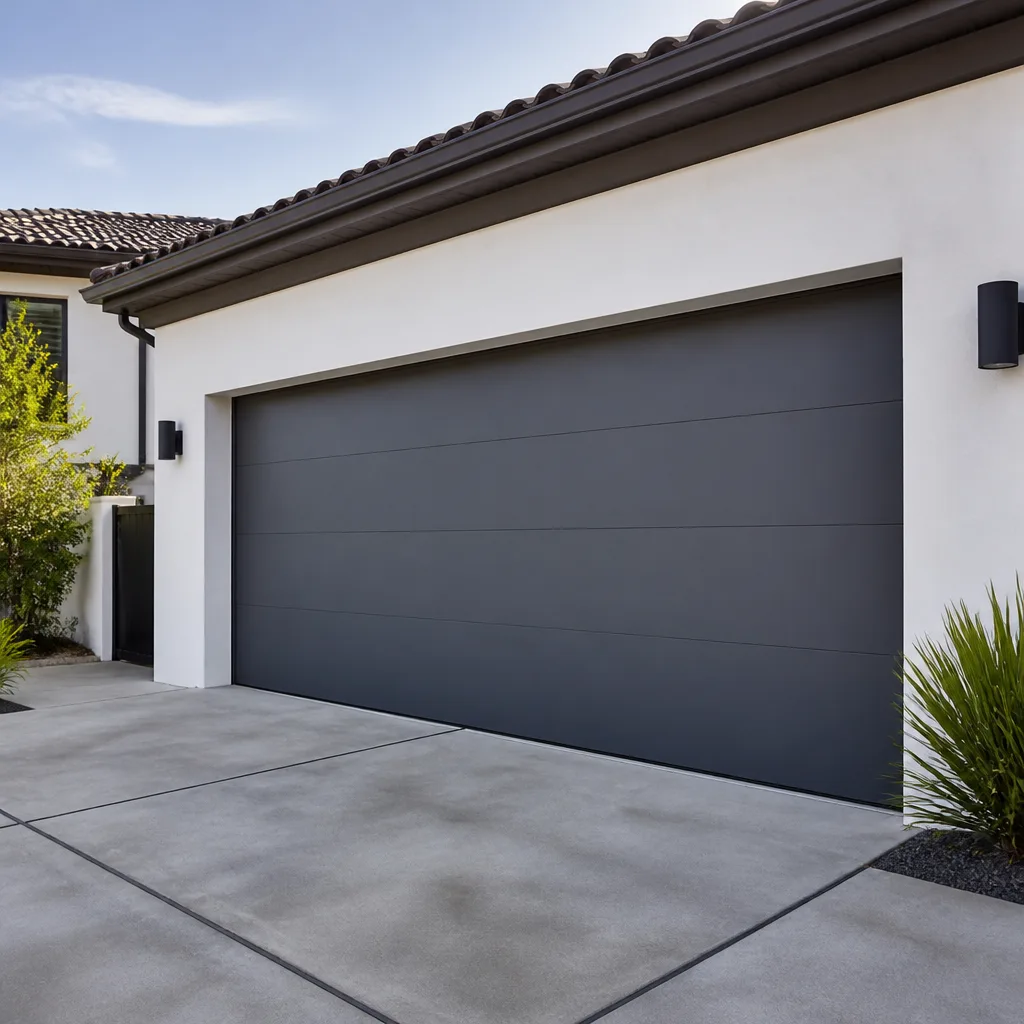 Modern flush
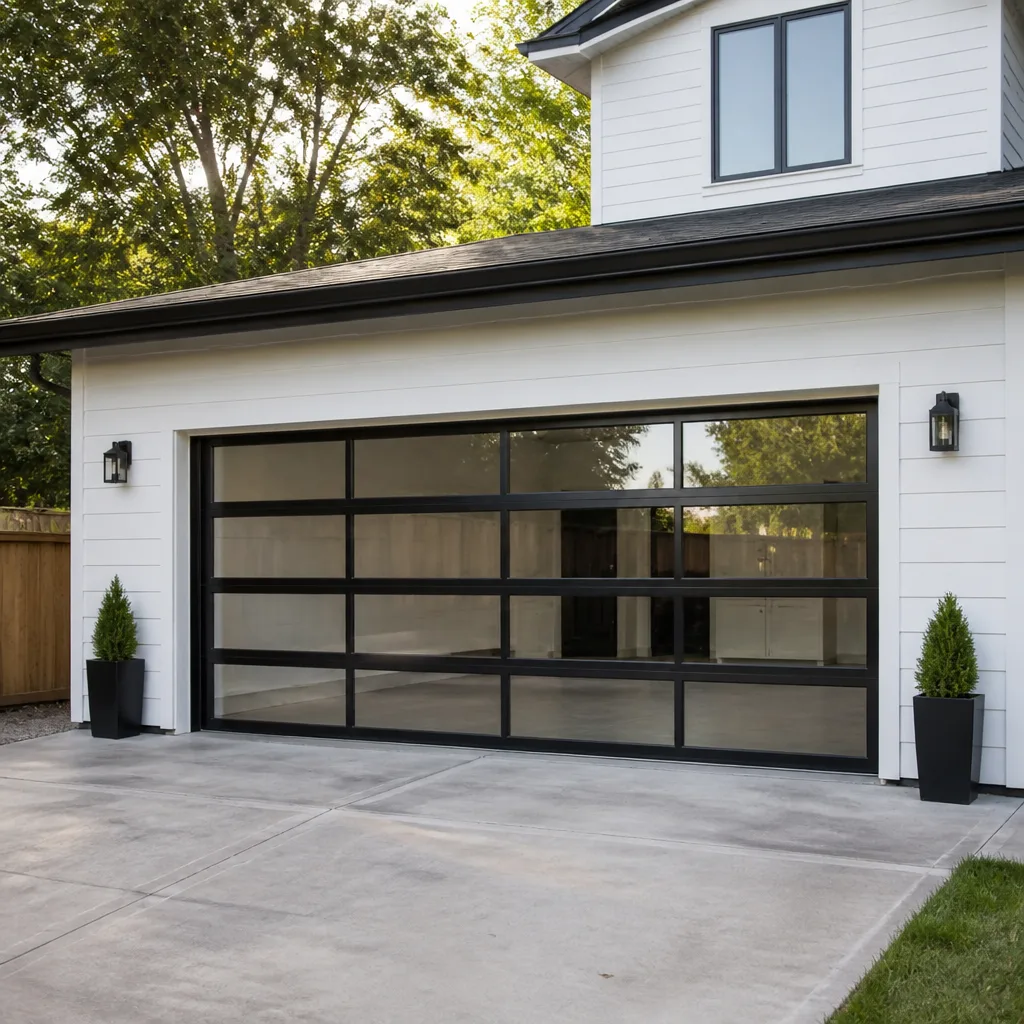 Full-view glass
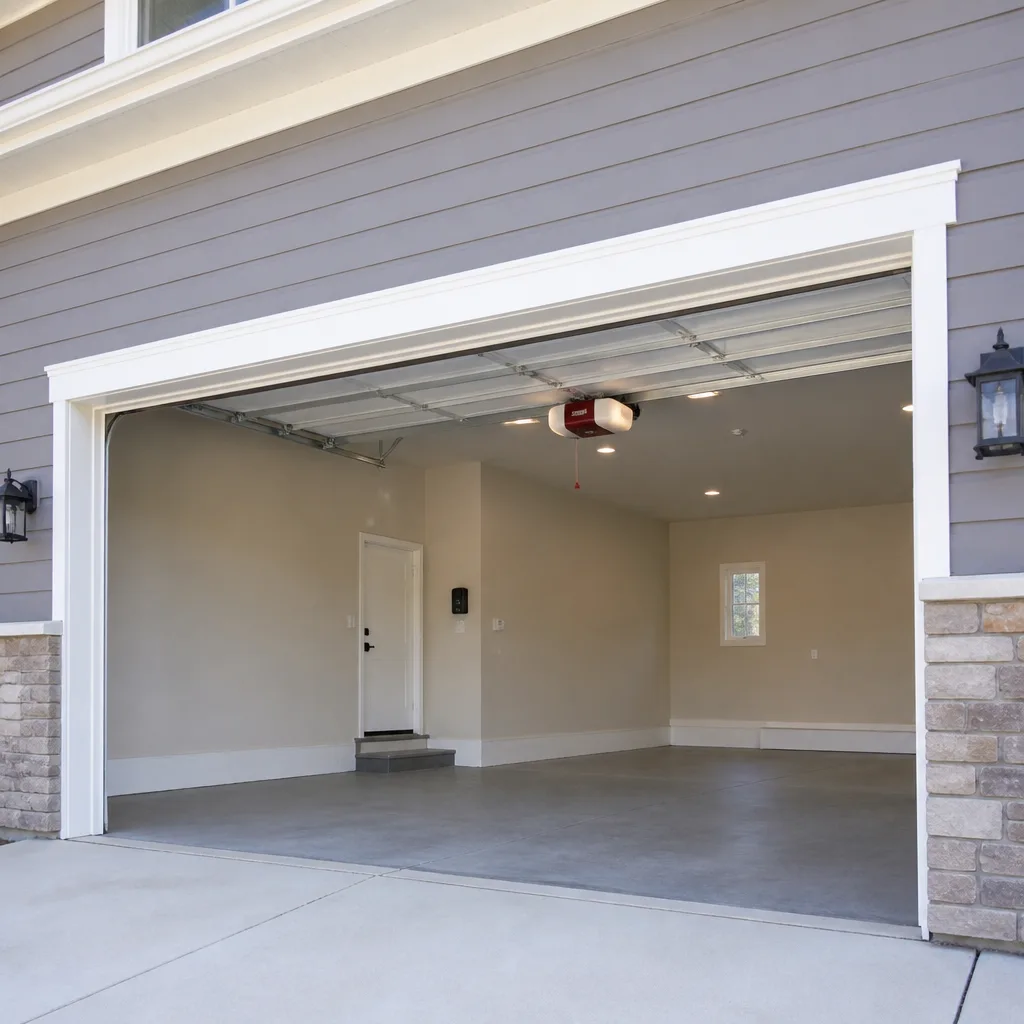 LiftMaster openers
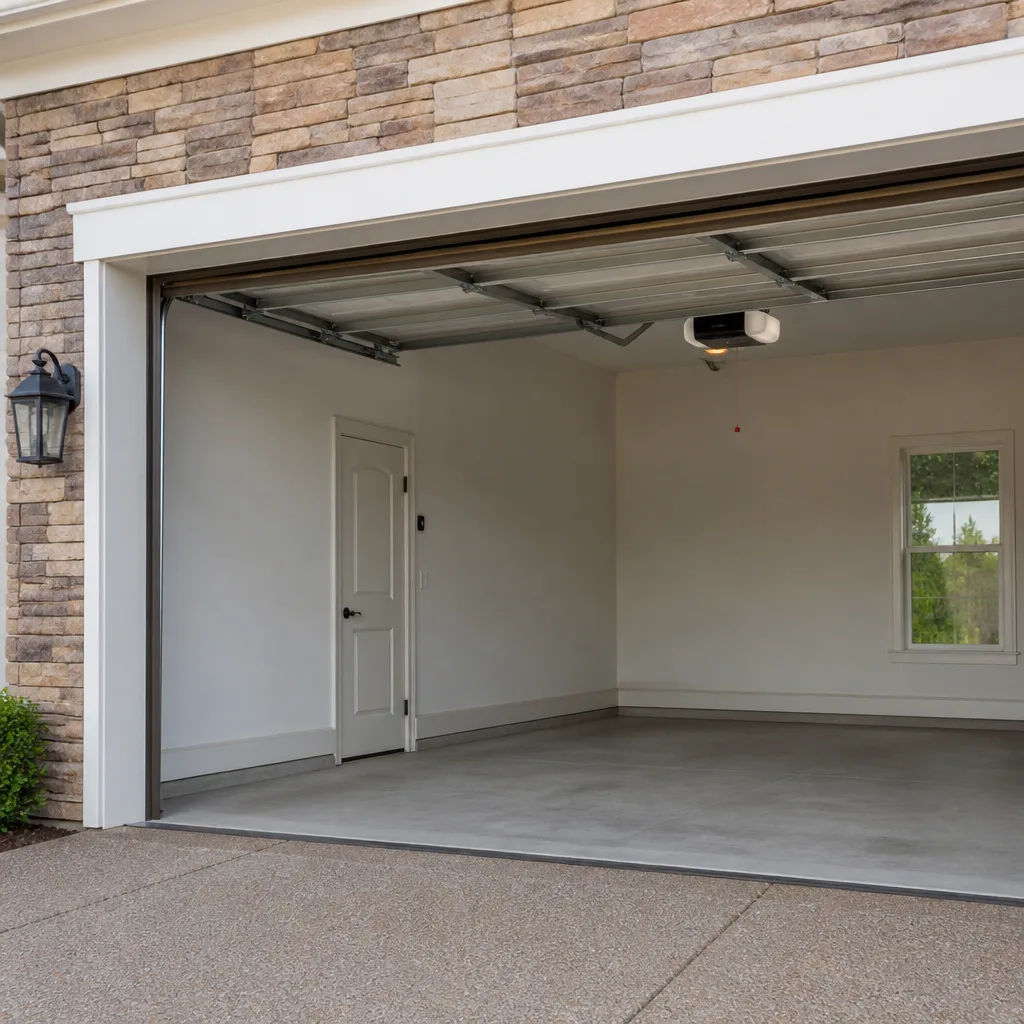 Chamberlain openers
Full 25-point door and opener safety check with every visit - springs, cables, rollers, tracks, and your LiftMaster or Chamberlain opener included
You get a price before we start. It does not change when the pro arrives.
Get your free estimateThe Complete Guide to Garage Doors in Burnsville
Most garage door advice you’ll find online was written for a country that doesn’t exist here. It assumes mild winters, stable temperatures, and a door that only opens and closes. Burnsville sits in a freeze-thaw zone that cycles through more than 100 temperature swings a year, and that mechanical reality shapes every decision a homeowner here makes about springs, seals, openers, and whether to repair or replace. A door that works fine in a mild climate can chew through springs and bottom seals in Burnsville in a fraction of the time. This guide covers what actually matters: how the local climate stresses your system, what housing stock you’re likely working with, which materials survive here, and how to decide between repair and replacement.
Quick Answer
Garage doors in Burnsville need more frequent spring, seal, and track attention than the national average because of heavy freeze-thaw cycling, and most homes built between the 1970s and 1990s use standard 7-foot or 8-foot doors with 1/2-horsepower openers. Repair is usually the right call when the panels and structure are sound, while replacement makes more sense when the door is badly dented, poorly insulated, or the repair cost approaches a meaningful share of a new door. Either way, a written estimate before work starts is the standard you should expect.
Styles & brands we work with
- Raised-panel steel
- Carriage house
- Modern flush
- Full-view glass
- LiftMaster openers
- Chamberlain openers
Table of Contents
- How Burnsville’s Freeze-Thaw Cycle Affects Your Garage Door
- What Door Sizes and Openers Are Standard in Burnsville Homes
- Which Door Materials Hold Up Best in Burnsville
- Repair or Replace? A Decision Map
- Why Springs Are the Highest-Risk Part of Your System
- Openers in Burnsville: What Breaks and Why
- Burnsville Permit Triggers and When an Inspection Applies
- A Maintenance Calendar That Fits a Minnesota Year
How Burnsville’s Freeze-Thaw Cycle Affects Your Garage Door
The freeze-thaw cycle is the single biggest mechanical stressor on a Burnsville garage door. Water gets into small gaps, freezes, expands, thaws, and repeats. Over a season that happens dozens of times, and the parts that suffer most are the ones you rarely look at.
Three components take the brunt:
- Bottom seals. The rubber or vinyl seal along the bottom edge is the first line against water and cold air. Freeze-thaw cycling stiffens it, cracks it, and eventually lets meltwater wick under the door. A worn seal also lets in cold air that raises heating costs and can freeze the door to the floor in a hard cold snap.
- Springs. Torsion and extension springs are under constant tension, and cold temperatures make steel more brittle. A spring that’s near the end of its cycle life is far more likely to snap during a cold snap than in mild weather. This is why spring failures cluster in winter here.
- Track alignment. Ground heave from freezing soil, plus the expansion and contraction of the door and frame, can nudge tracks out of true. A track that’s off by a fraction of an inch makes the door drag, strains the opener, and wears rollers faster.
In our experience across Burnsville, the practical takeaway is that seasonal checks matter more here than in milder climates. A door that gets a once-a-year look-over before winter and again after the spring thaw lasts longer and fails less often at the worst possible moment.
What Door Sizes and Openers Are Standard in Burnsville Homes
Most Burnsville homes were built between the 1970s and 1990s, and that housing stock sets the baseline for what you’ll find in a typical garage. Knowing the era tells you a lot about what’s behind the door before anyone opens a panel.
The common patterns in Burnsville:
- Door widths. Single-car garages usually have a 9-foot-wide door. Two-car garages typically use a 16-foot-wide door, sometimes split into two 8-foot or 9-foot doors depending on the build.
- Door heights. Seven feet is the norm; eight feet appears in some homes with taller ceilings or where a previous owner wanted clearance for a larger vehicle.
- Opener voltage and type. Homes from this era commonly run standard residential openers on a 1/2-horsepower motor. Chain-drive units were the default, and many are still in service today, though belt-drive and screw-drive replacements are common upgrades.
- Brands in the field. LiftMaster, Chamberlain, Genie, Craftsman, Clopay, Amarr, Wayne Dalton, and Raynor equipment shows up regularly in Burnsville homes. Because we work on the brand you already have, diagnosing and getting the right part for your specific system is usually straightforward.
If your home is from the 1970s or 1980s, there’s a reasonable chance the opener is original or has been replaced once. If it’s from the 1990s, you may be looking at a first-generation smart-capable unit or a legacy chain-drive that’s simply due for replacement. Neither is a problem, but it does shape what a repair or upgrade looks like.
Which Door Materials Hold Up Best in Burnsville
Material choice matters more in Burnsville than in most places because your door faces two enemies at once: humidity swings and road salt exposure near Dakota County corridors. A material that performs well in a dry climate can struggle here.
Here’s how the common options compare for a Burnsville home:
- Steel. The most common choice and a solid performer. Steel doors handle temperature swings well and resist warping, but they can rust at the bottom edge where salt-laden slush collects. A steel door with a good bottom seal and periodic cleaning of the lower panels holds up well.
- Aluminum. Light and rust-resistant, which is a real advantage against road salt. The trade-off is that aluminum dents more easily than steel, so it’s a better fit for low-traffic garages.
- Wood. Attractive and insulating, but the most demanding in a Burnsville climate. Humidity swings cause wood to swell and shrink, and that means regular refinishing to keep it from cracking or warping.
- Composite and vinyl. These resist moisture and salt well and need little upkeep. They’re a practical match for the freeze-thaw cycle, though the selection and price range vary widely.
The road-salt point is worth emphasizing. If your garage faces a street that gets treated in winter, the lower panels and bottom seal take a regular dose of salt spray. Rinsing the bottom edge periodically and keeping the seal in good shape is the simplest defense. Materials like Clopay and Amarr steel lines are common in this market for exactly this reason, and they hold up with basic care.
Repair or Replace? A Decision Map
The repair-versus-replace question comes down to three factors: door age, insulation value, and how the repair cost stacks up against a new door. Here’s how we walk through it.
Ask these questions in order:
- Is the door structurally sound? If the panels are straight, the frame is solid, and the hardware is intact, repair is usually the answer. A single broken spring, a failed opener, or a worn seal is a repair, not a replacement.
- How old is the door? A door in the later part of its service life with multiple problems at once starts tipping toward replacement. One failure is a repair; a pattern of failures is a signal.
- Does the door insulate well enough? If your garage sits under living space or you use it as a workspace, poor insulation costs you every winter. An insulated door is often worth it on energy costs alone in a Burnsville climate.
- Does the repair cost approach a meaningful share of a new door? When a repair is a large fraction of a full replacement, and the door is also aging, replacement usually makes better long-term sense.
- Are you planning to stay in the home? A homeowner staying long-term gets the full benefit of a new insulated door. A short-term owner may prefer the repair that keeps things working.
In our experience, the majority of Burnsville calls end in repair, because most failures are component-level rather than whole-door. But the decision should be yours, and it should be based on a clear look at the door rather than a guess over the phone.
Why Springs Are the Highest-Risk Part of Your System
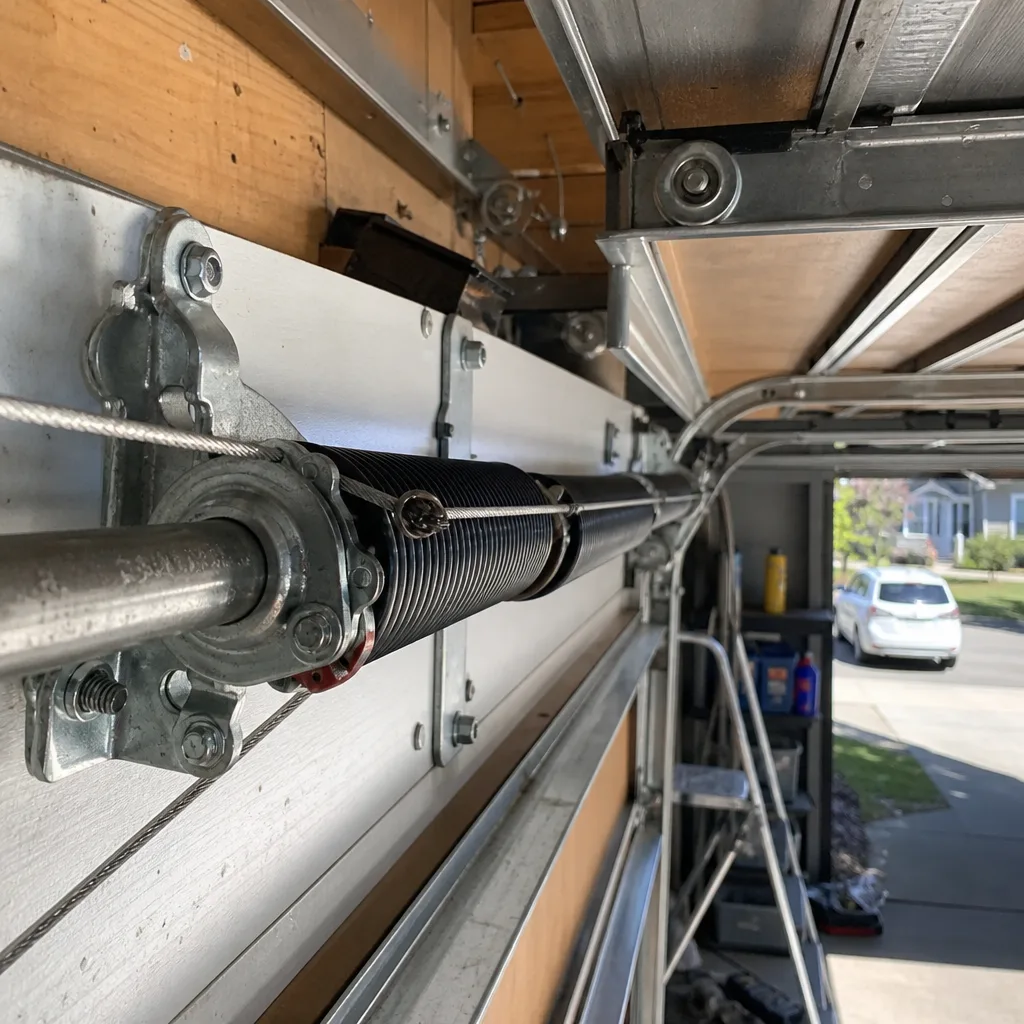
Springs are the most dangerous component in your garage door system, and we treat them that way. A torsion spring or extension spring holds enough stored energy to cause serious injury if it releases unexpectedly. This is not a part to experiment with.
What you should know as a homeowner:
- Springs have a finite cycle life. Every open and close counts against it, and a door used several times a day wears springs faster than one used twice daily.
- Cold weather raises failure risk. Steel is more brittle in the cold, which is why a Burnsville winter tends to expose a spring that was already near the end of its life.
- A loud bang from the garage is often a spring. If the door won’t open, or opens a few feet and stops, a broken spring is a common cause.
- Springs are replaced in pairs. A matched set usually wears together, so replacing one spring and leaving the other is a false economy. A pair costs about twice a single spring.
We handle garage door spring repair as a core specialty, and that’s deliberate. It’s the repair with the least margin for error, and it’s also one of the most common. If a spring has failed, don’t try to operate the door or replace the spring yourself. Call a trained professional and keep everyone clear of the door until it’s fixed. Our technicians have up to 9 years of experience with this exact repair.
Openers in Burnsville: What Breaks and Why
Opener problems are the second-most-common reason for a service call in Burnsville, and the symptoms usually point to a handful of causes. Older chain-drive units and newer app-connected systems fail in different ways, so it helps to know what you’re working with.
Common opener failures and their usual causes:
- Door goes up a little and reverses. Often a safety sensor issue, a misaligned track, or a force setting that needs adjustment.
- Remote or keypad won’t work. Usually a battery, a lost pairing, or a logic board problem on an aging unit.
- Motor runs but door doesn’t move. Frequently a stripped gear or a broken drive belt or chain.
- Opener strains or hums without moving. Often a spring failure or a track binding, which overloads the motor.
We repair openers across all the major smart and legacy platforms, from basic chain-drive units to app-connected LiftMaster and Chamberlain systems, plus Genie and Craftsman equipment common in older Burnsville homes. Because we work on the brand you already have, there are no brand-specific gaps. If your opener is repairable, you’ll get a straight answer. If a replacement is the better call, you’ll hear that too. Visit our garage door opener repair page for more on what a typical visit covers.
Burnsville Permit Triggers and When an Inspection Applies
Permit rules for garage door work depend on the scope. A repair, spring replacement, or opener swap generally doesn’t trigger a permit, while a full door replacement can, depending on the city’s current requirements. Because rules change, the right move is to ask the city’s building department before a replacement is scheduled.
Here’s the general understanding:
- Repairs and component swaps. Spring replacement, opener repair, track adjustment, and seal work are typically not permitted separately.
- Full door replacement. Replacing the entire door and its hardware may require a permit, and an inspection may follow. Confirm with the city before the work is ordered.
- Structural changes. If a replacement involves altering the opening, the header, or the framing, expect the permit question to be part of the conversation.
We don’t guess at Burnsville’s current rules, and neither should you. A quick call to the city’s building department settles the permit question before anything is ordered, and it’s a conversation we’re glad to have with you as part of the estimate.
A Maintenance Calendar That Fits a Minnesota Year
A little seasonal attention goes a long way in Burnsville. The goal isn’t a long checklist; it’s catching small problems before the freeze-thaw cycle turns them into big ones.
A practical year looks like this:
- Before winter. Check the bottom seal for cracks, lubricate the rollers and hinges, and listen for any unusual noise. This is also the time to confirm the door reverses properly when it meets an obstruction.
- Mid-winter. Clear slush and ice from the bottom edge after storms. Salt and meltwater collect there, and a frozen seal is hard on the door and the opener.
- After the spring thaw. Look over the tracks for alignment, clear debris, and check the seal again. Ground movement over winter can knock tracks out of true.
- Summer. Rinse the lower panels if your door faces a treated street, since road salt residue lingers. Tighten any hardware that has loosened.
If the door starts making new noises, reversing unpredictably, or feeling heavier than usual, that’s a sign to have it looked at rather than to keep operating it. A quick inspection now is cheaper than an emergency call later. For a broader look at what a service visit covers, see our garage door repair page.
Common Mistakes to Avoid
- Ignoring a worn bottom seal through winter. A cracked seal lets water and cold air in, and it can freeze the door to the floor. Replace it before the cold sets in.
- Replacing one spring and leaving the other. Matched springs wear together, so a single replacement usually means a second call soon after. Replace the pair.
- Treating spring work as a DIY project. Torsion and extension springs hold dangerous stored energy. This is the one repair that should always go to a trained professional.
- Skipping the permit question on a full replacement. A replacement can require a permit and inspection in Burnsville. Ask the city’s building department before ordering the door.
- Choosing a door on looks alone. In this climate, insulation value and salt resistance matter as much as style. A beautiful door that rusts at the bottom edge is a poor fit for a Dakota County street.
- Running an opener that strains or hums. That symptom often points to a spring or track problem, and continuing to run the opener can burn out the motor.
- Skipping the pre-winter check. The freeze-thaw cycle is unforgiving, and a small issue caught in fall is far cheaper than a winter emergency.
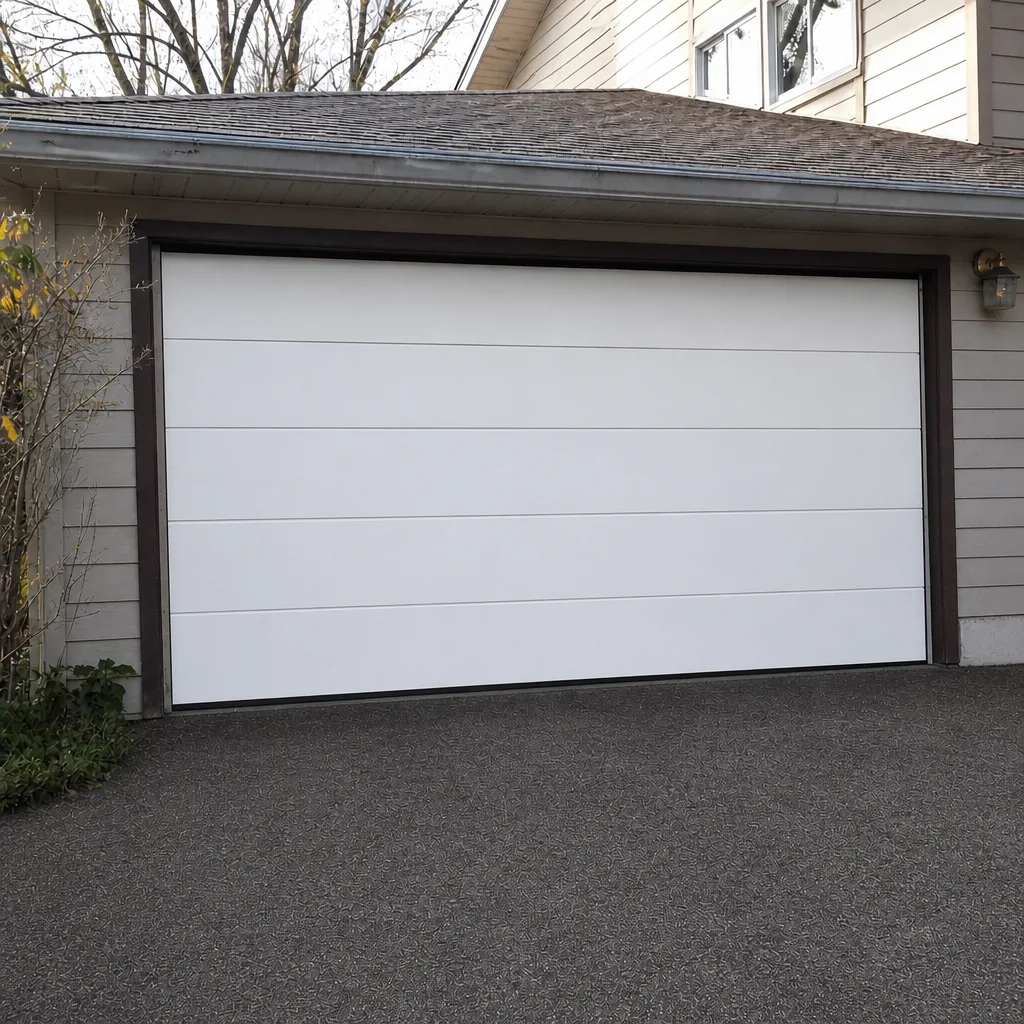
See the difference
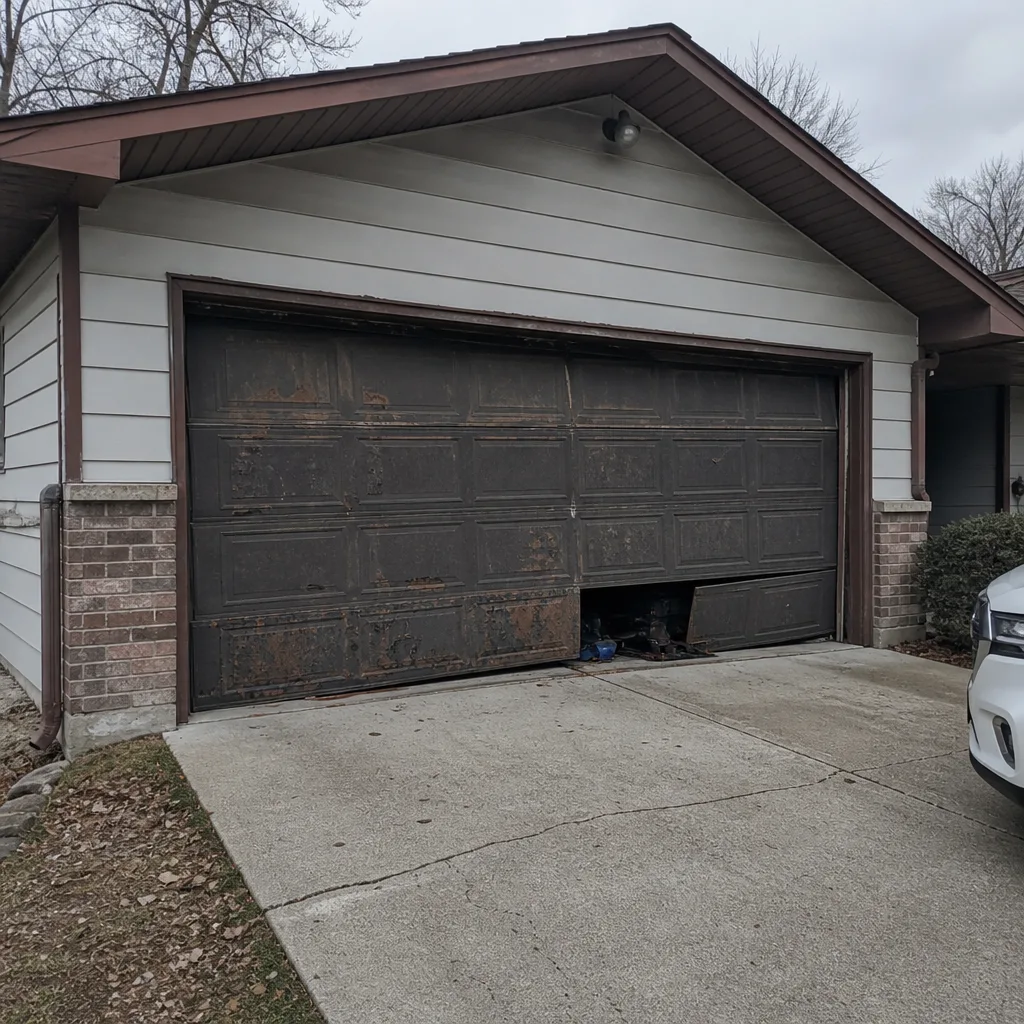 Before
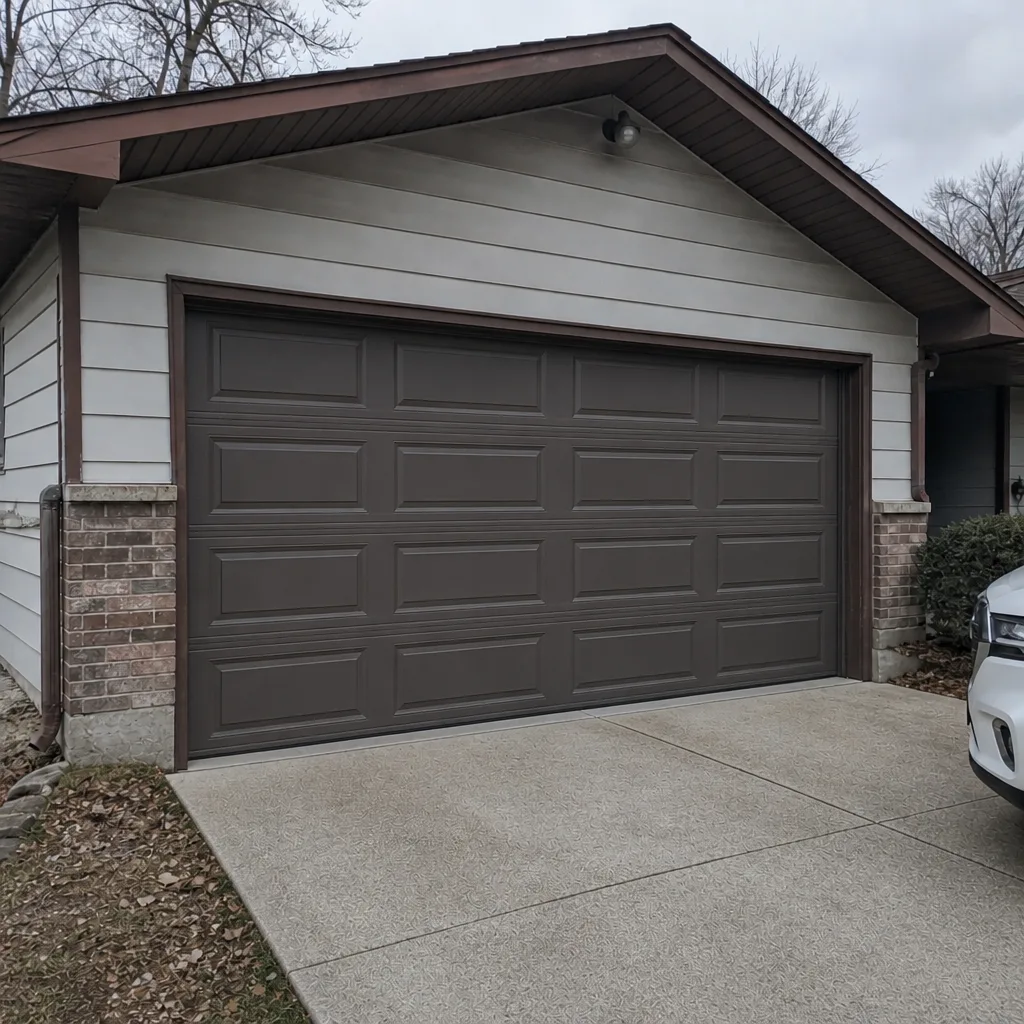 After
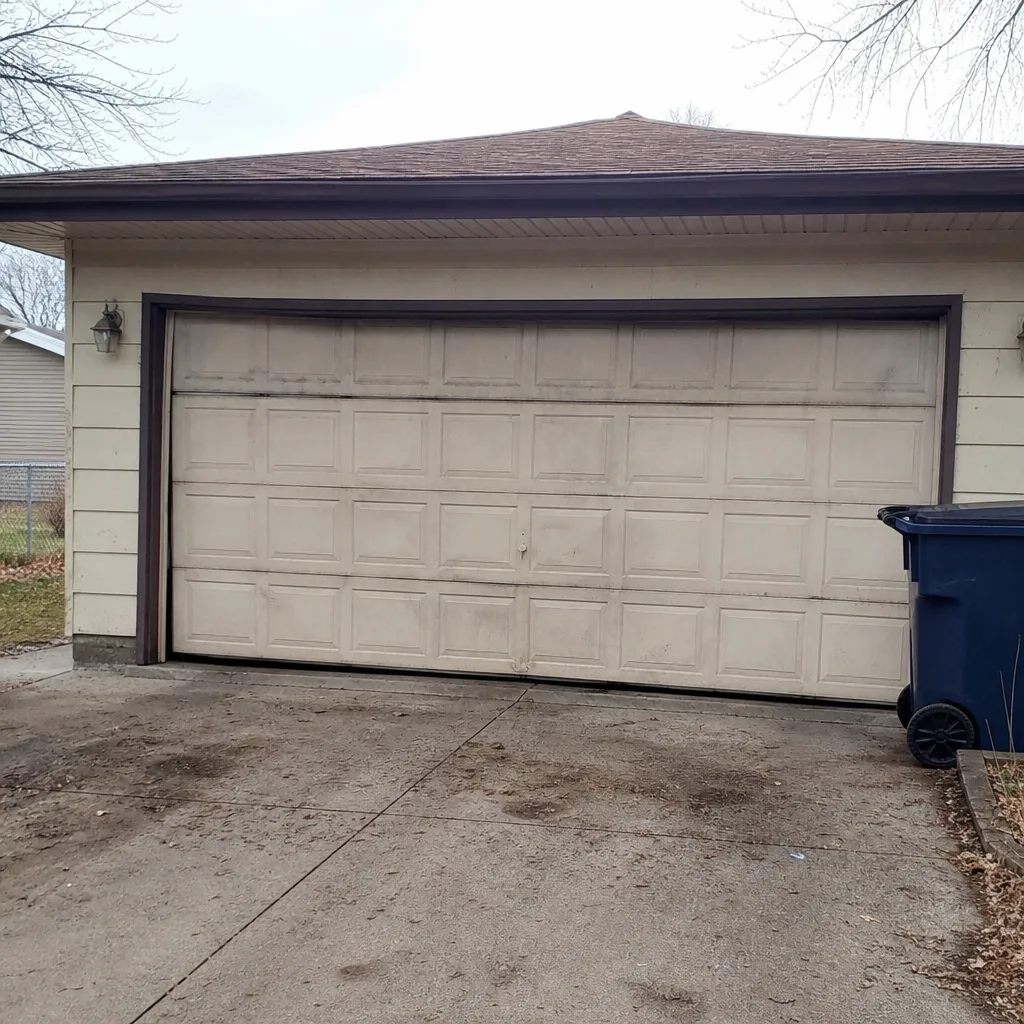 Before
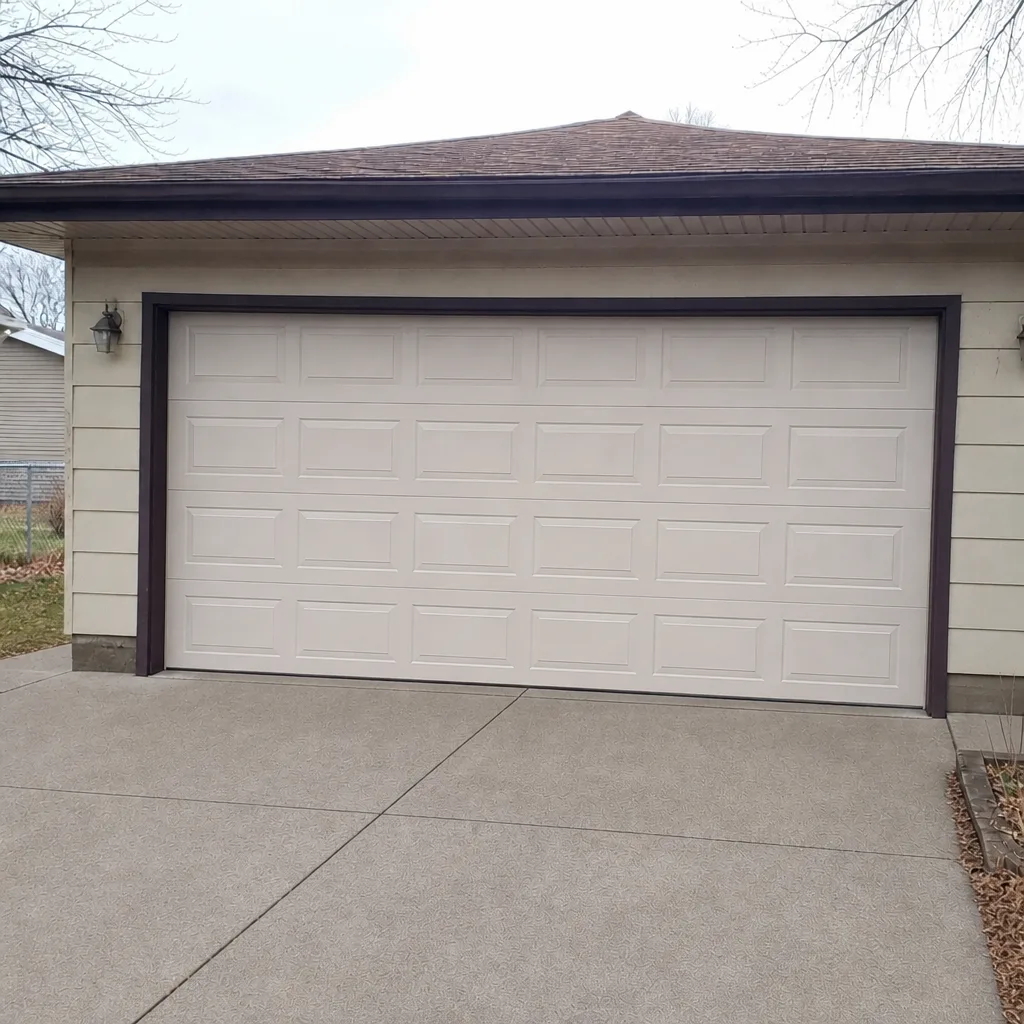 After
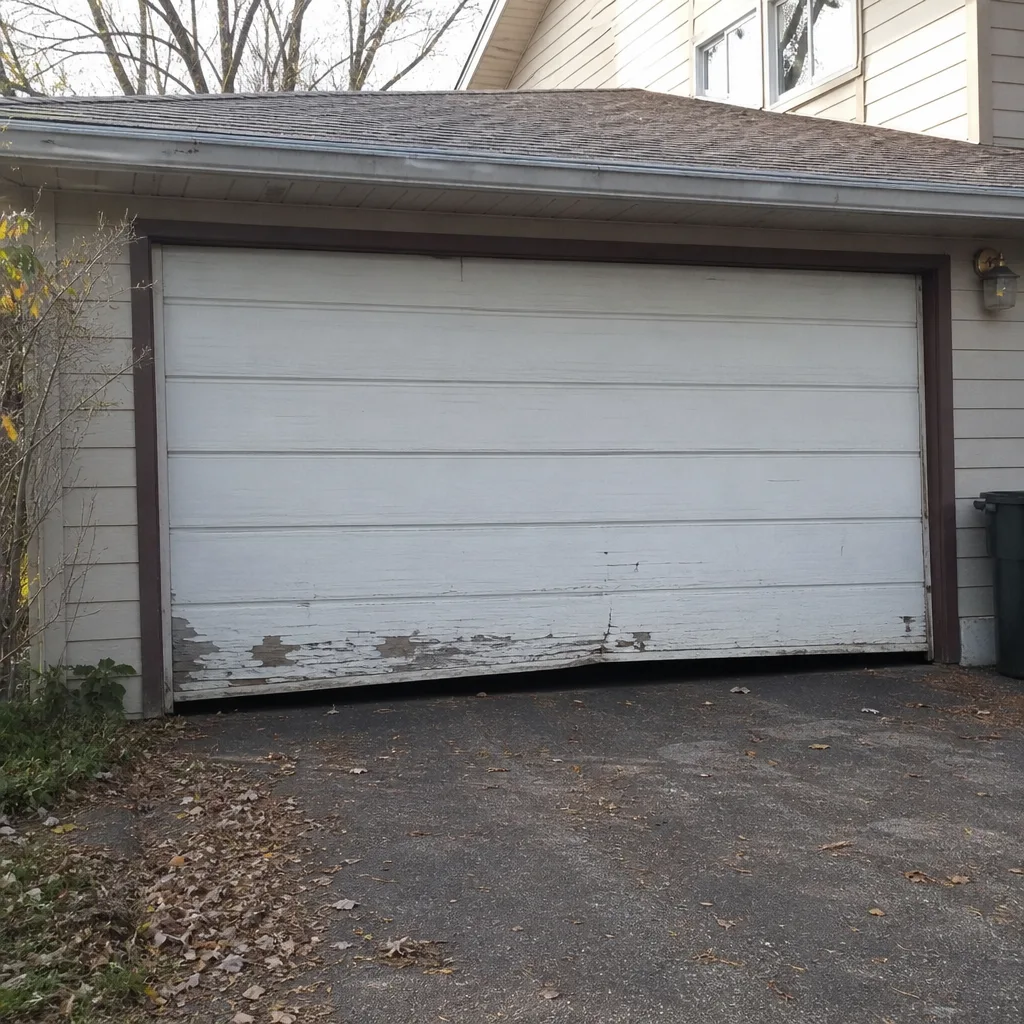 Before
 After
When to Call a Professional
Call a professional when the door won’t open or close safely, when you hear a loud bang from the garage, when a spring is visibly broken, or when the opener strains without moving the door. A door that reverses unpredictably, drags on the tracks, or feels unusually heavy is also a call-worthy problem. These symptoms often point to components that need a trained eye and the right parts. Emergencies count too: a broken door can trap a car or leave your home unsecured, and emergency service is part of our standard lineup, not a premium tier. Burnsville Garage Door Repair Co offers free estimates in Burnsville – call (855) 560-7429.
Frequently Asked Questions
Spring repair in Burnsville typically runs in the range of a few hundred dollars for a single spring, and a matched pair usually costs about twice that because both are replaced together. The written estimate you receive after an inspection sets the final price. Call (855) 560-7429 for an exact quote – estimates are free.
Same-day service is often possible for repairs like a broken spring, a stuck door, or an opener that won’t respond. Emergency service is a standard part of what we offer, not an upsell, so time-sensitive failures get priority. Call (855) 560-7429 and we’ll tell you what’s available.
The price is quoted and agreed before any work starts, so you know the cost before we begin. If the inspection turns up something that wasn’t clear from the initial description, we’ll explain it and get your approval before doing anything. Call (855) 560-7429 for a free estimate.
The local professionals we connect you with are licensed and insured as their state requires. We work only with vetted local pros who perform the work to standard. Call (855) 560-7429 to talk through your door and get a free estimate.
It depends on the scope. Repairs and component swaps generally don’t trigger a permit, but a full door replacement may require one, and an inspection may follow. Ask the city’s building department before the replacement is scheduled, and we’ll walk through the permit question with you.
We work on the brand you already have across the most widely-owned names, including LiftMaster, Chamberlain, Genie, Clopay, Amarr, Wayne Dalton, Craftsman, and Raynor. That brand familiarity means fewer return visits and the right part for your specific system. Call (855) 560-7429 for a free estimate.
The Bottom Line
Burnsville’s freeze-thaw cycle is the fact that shapes every garage door decision here. It wears bottom seals, stresses springs, and nudges tracks out of alignment faster than in milder climates. Homes built between the 1970s and 1990s generally carry 9-foot or 16-foot doors with 1/2-horsepower openers, and those systems respond well to seasonal checks and timely repairs. Repair is usually the right call unless the door is aging, poorly insulated, or the repair cost approaches a meaningful share of a new door. Springs deserve professional handling every time. Whatever your door needs, a written estimate before work starts is the standard. For help from a specialist who works on the brand you already have, Burnsville Garage Door Repair Co is a call away.
Ready to get your door working again? Call (855) 560-7429 for a free estimate in Burnsville.
Written by the team at Burnsville Garage Door Repair Co.