Last updated November 22, 2026
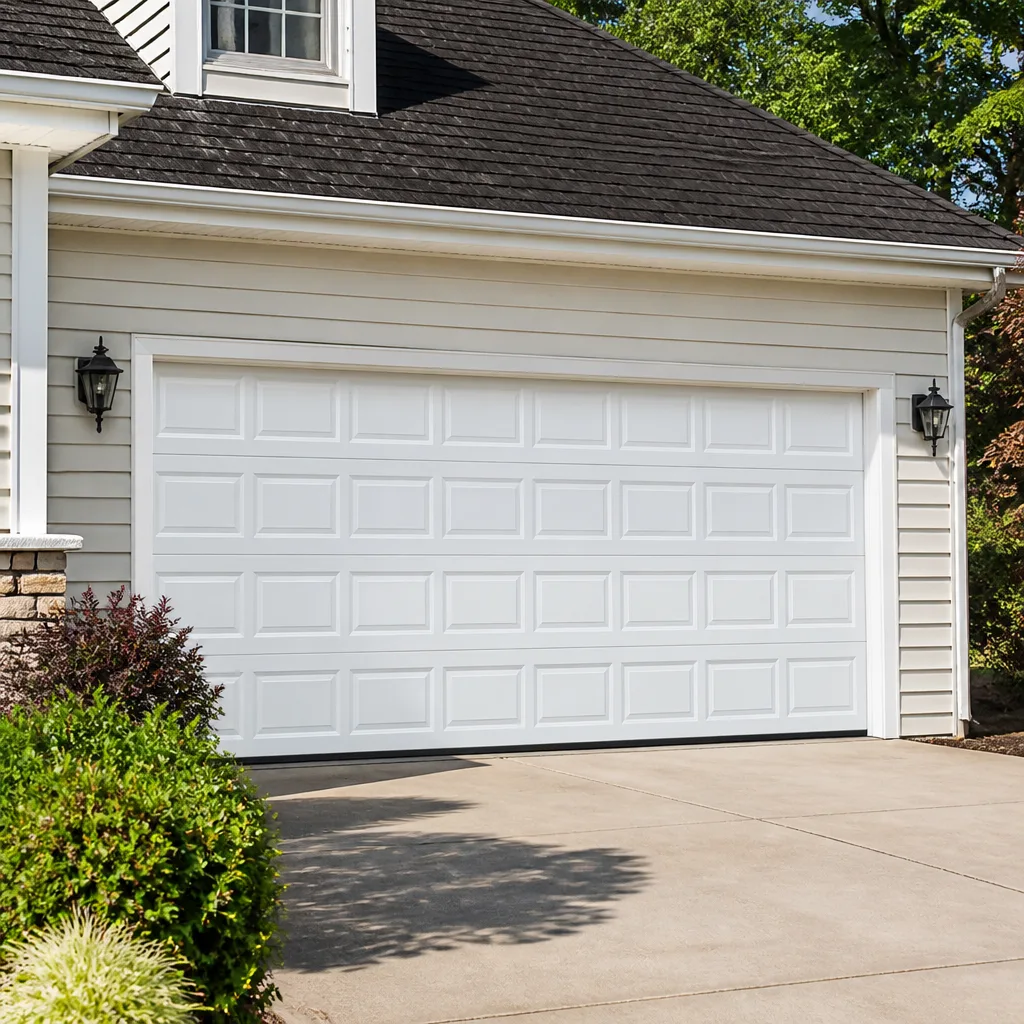 Raised-panel steel
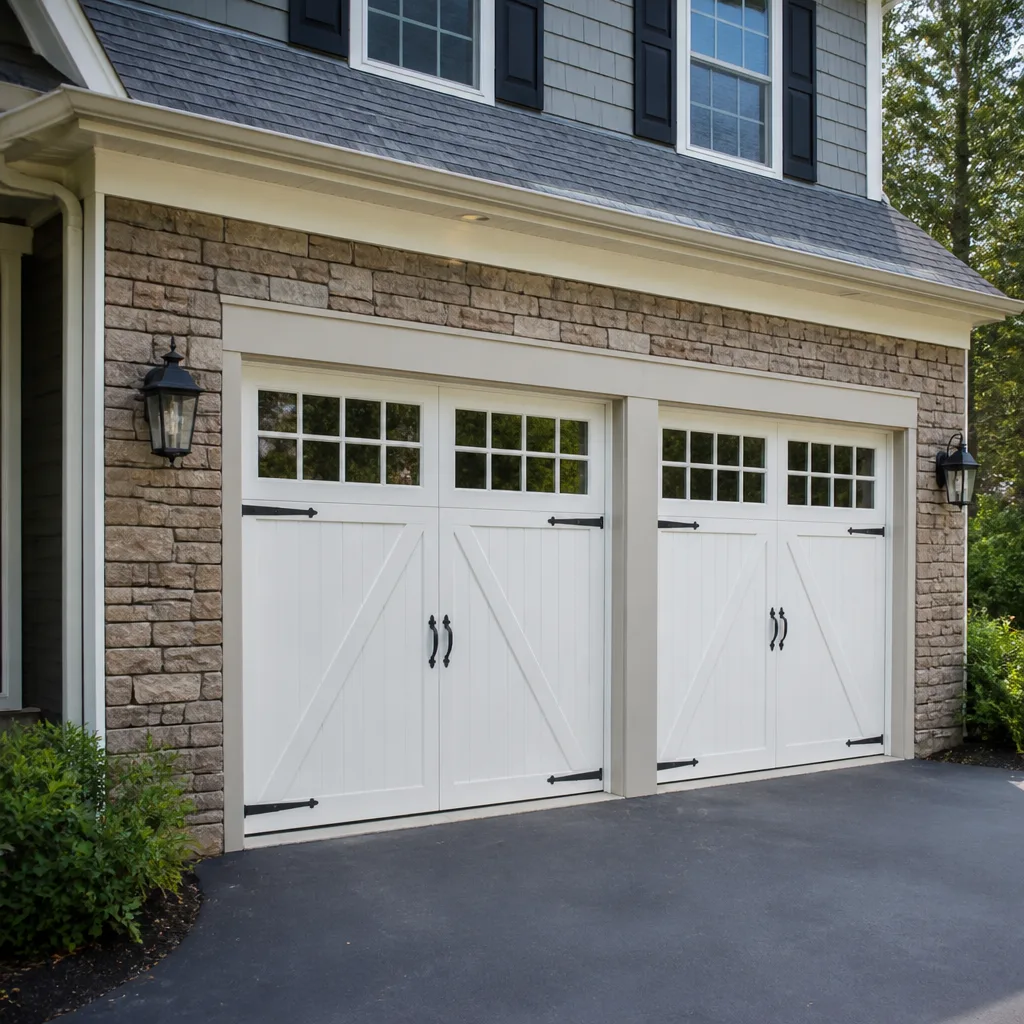 Carriage house
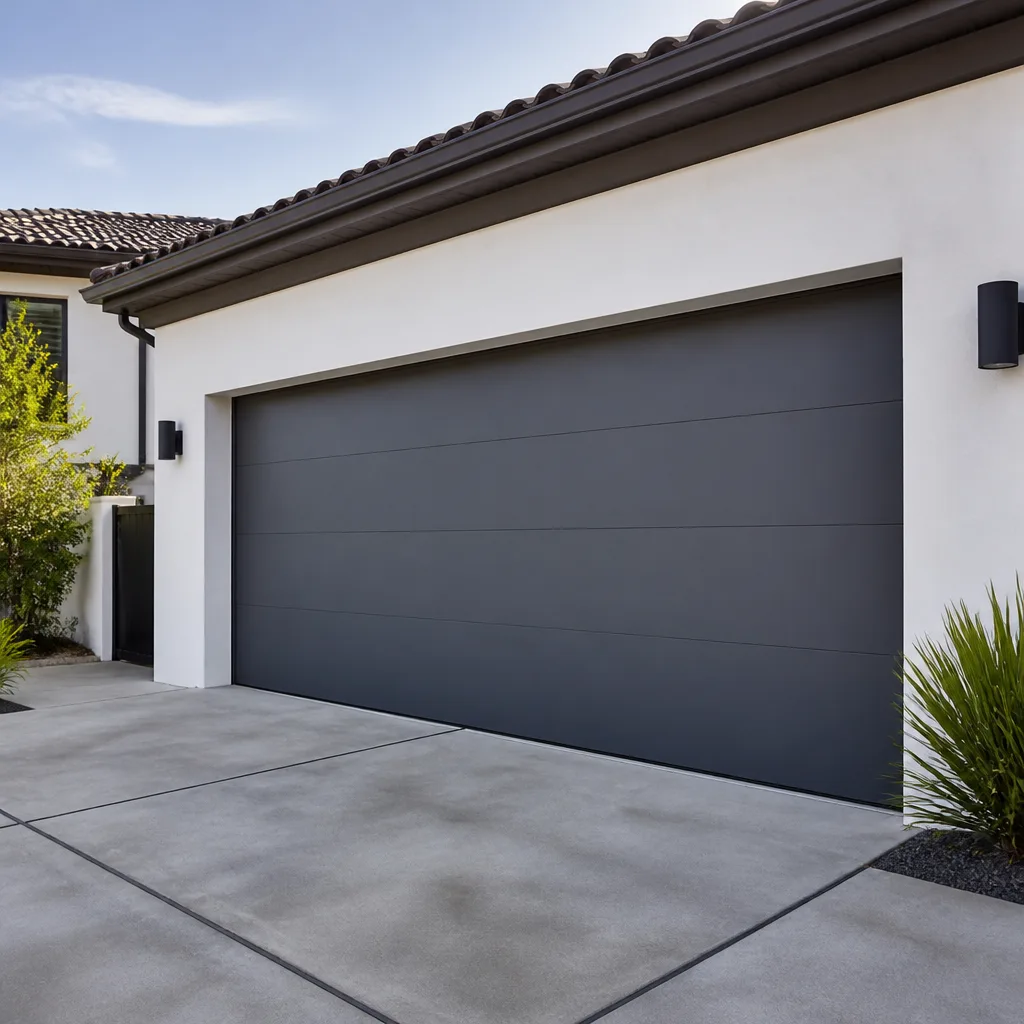 Modern flush
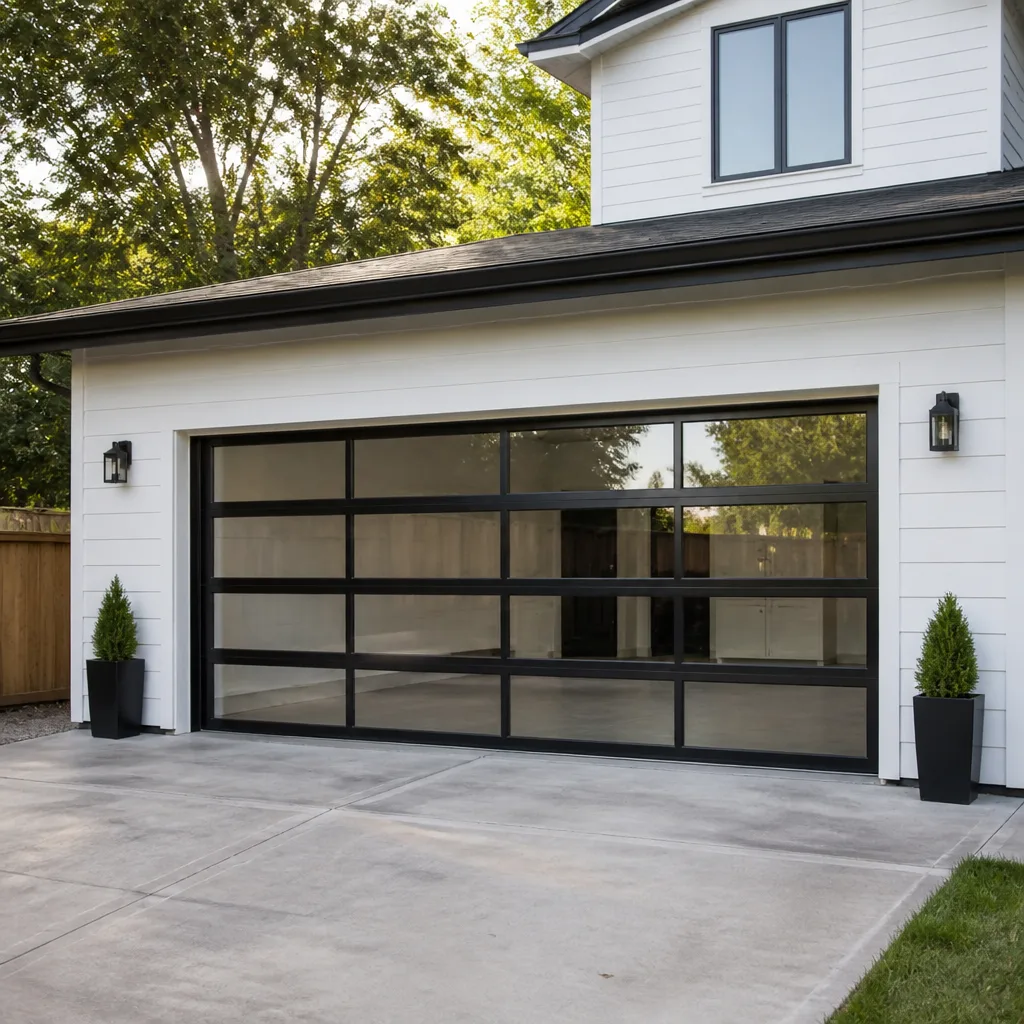 Full-view glass
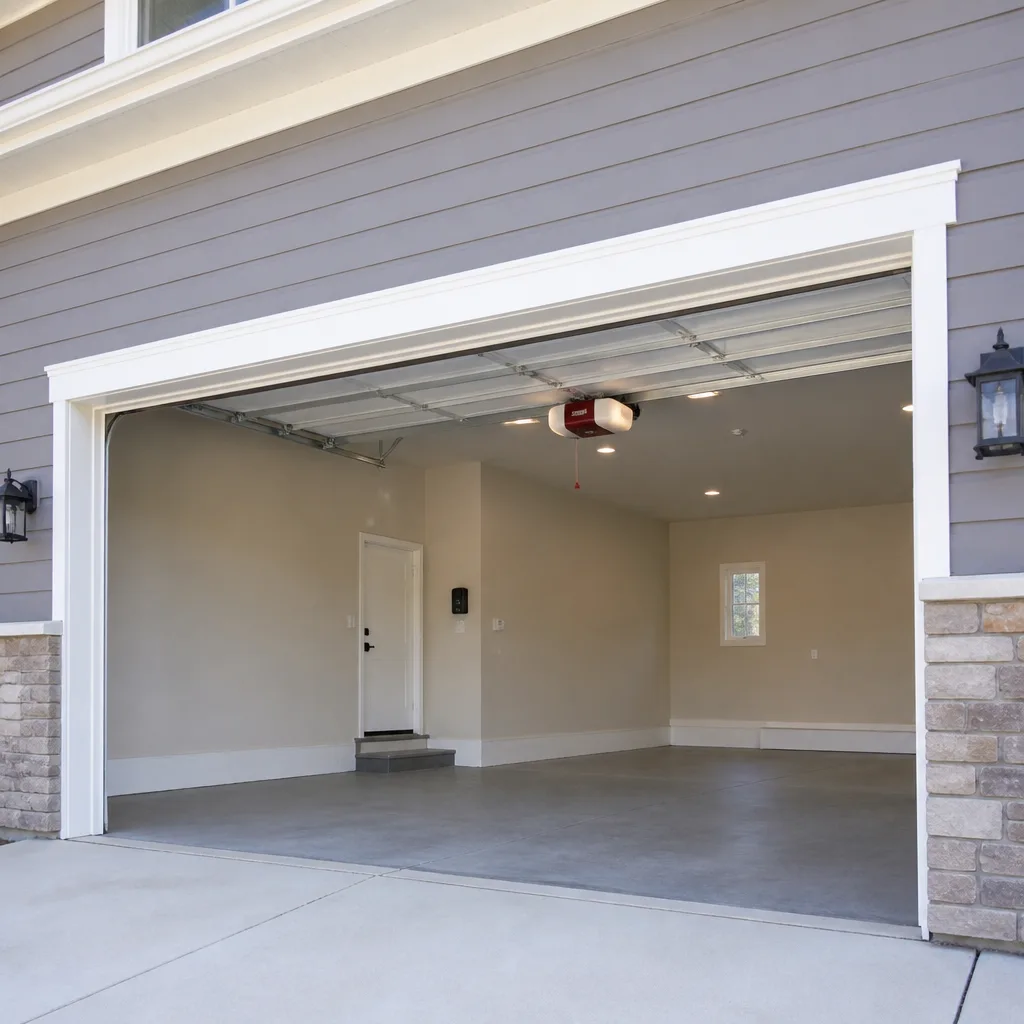 LiftMaster openers
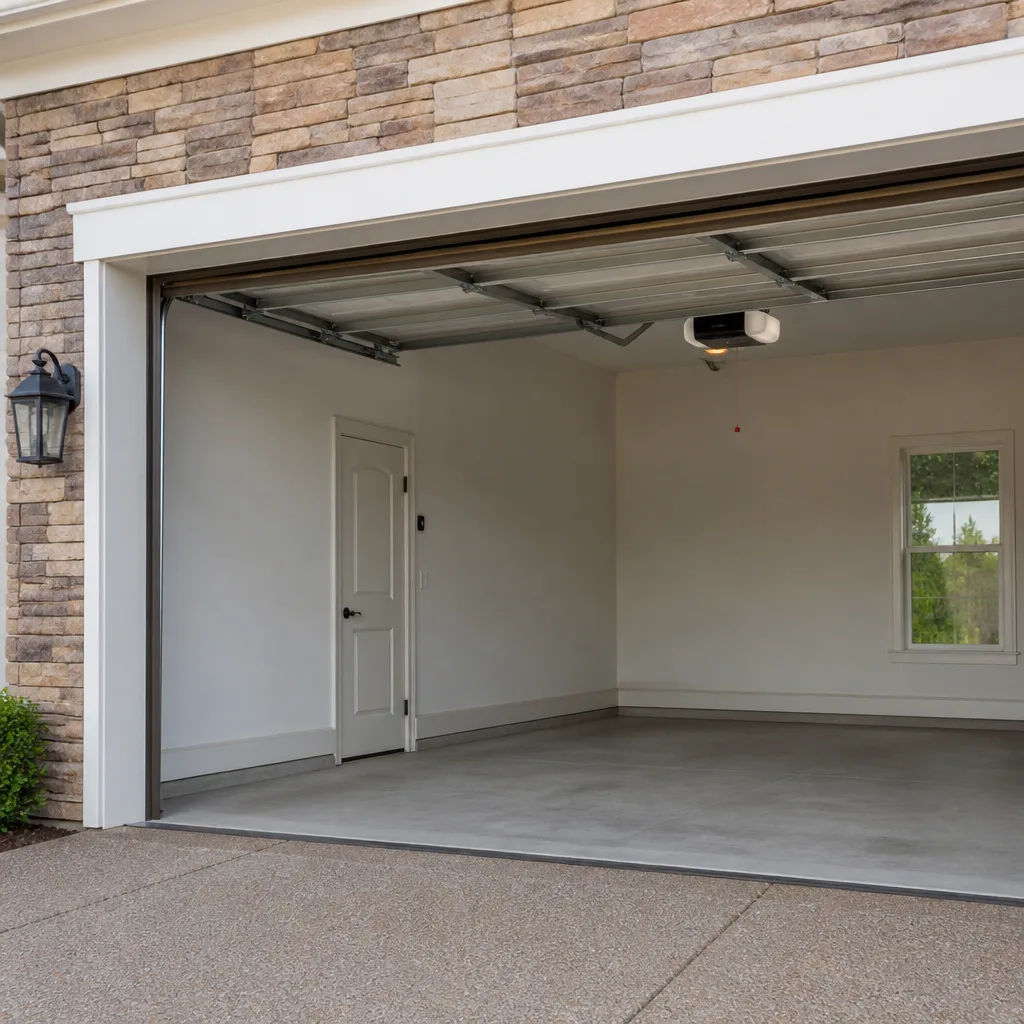 Chamberlain openers
Full 25-point door and opener safety check with every visit - springs, cables, rollers, tracks, and your LiftMaster or Chamberlain opener included
You get a price before we start. It does not change when the pro arrives.
Get your free estimateGarage Door Repair Maintenance Checklist for Burnsville Homeowners
Most homeowners who lubricate their garage door rollers are using the wrong product. WD-40 is a solvent, not a lubricant, and it accelerates wear on the nylon rollers common in doors installed in the 1990s and 2000s. The same gap shows up everywhere in garage door maintenance: people know they should “check the door” but nobody tells them what they’re actually looking for. A checklist that only lists parts to touch is useless. What you need is the diagnostic logic behind each task, so when you find a worn roller or a track that’s drifted, you know whether it’s normal wear or a warning. This guide gives Burnsville homeowners that reasoning, task by task, season by season.
Quick Answer
A garage door maintenance checklist for Burnsville homes should include monthly visual inspections of springs, cables, and tracks; lubrication of moving parts with a cold-rated product every few months; a manual balance test to confirm the door lifts smoothly by hand; and a pre-winter check of the weather seal and opener force settings before the first hard freeze. Leave torsion spring adjustments, cable replacement, and any work on the spring system to a technician – those are the genuinely dangerous parts.
Styles & brands we work with
- Raised-panel steel
- Carriage house
- Modern flush
- Full-view glass
- LiftMaster openers
- Chamberlain openers
Table of Contents
- What Lubricant Actually Works in Minnesota’s Temperature Range?
- How to Run a Manual Balance Test (and What a “Pass” Looks Like)
- Visual Inspection Points Specific to Older Burnsville Housing Stock
- The Seasonal Timing Guide: Pre-Freeze, Post-Thaw, and Everything Between
- Which Maintenance Tasks Are DIY-Safe and Which Require a Technician
- Opener Maintenance Checklist: Belt, Chain, and Smart Units
- Common Mistakes to Avoid
- When to Call a Professional
What Lubricant Actually Works in Minnesota’s Temperature Range?
On a garage door in Burnsville, the wrong lubricant does more damage than no lubricant at all. This is the single biggest maintenance mistake we see, and it’s not even close.
The problem is that most off-the-shelf spray lubricants marketed for garage doors are formulated for year-round temperatures above freezing. In Burnsville, your garage door cycles through a temperature range that runs from roughly -20°F on the coldest winter mornings to 90°F or higher on the hottest summer days. That’s a 110-degree spread, and most lubricants can’t handle it. Products that are too thin at cold temperatures migrate off the surface or fail to stay put. Products that are too thick gum up at cold temperatures, stiffening the rollers and forcing the opener to work harder. And WD-40, the can every homeowner reaches for first, is neither of those things – it’s a solvent and light oil blend that strips whatever lubricant is already there and leaves a thin film that evaporates within weeks. On nylon rollers, that stripping action speeds up wear.
What actually works in a Burnsville garage:
- Silicone-based or lithium-complex grease on hinges and rollers rated for low temperatures. These stay pliable below freezing without gumming up in summer heat.
- White lithium grease in a tube or spray for the operator rail and the curved part of the track where rollers travel. It holds up under temperature swings far better than thin oils.
- A dedicated cold-weather synthetic lubricant on the torsion springs themselves if you’re going to touch them at all – but we’d rather you didn’t. More on that below.
- Nothing on nylon rollers in most cases. Many of the nylon rollers used in doors installed in Burnsville in the 1990s and 2000s are permanently lubricated and don’t need anything added. Greasing them attracts dust and grit, which forms a paste that wears them down faster.
If you’re not sure what product is on your door now, wipe the roller stems and hinges with a clean rag and start fresh with a cold-rated silicone or lithium product. If a maintenance routine ever needs more than lubrication to fix a dragging door, that’s a sign the issue is mechanical rather than a lubrication problem. Our garage door repair service handles that kind of diagnosis, and we’ll tell you what’s actually causing it rather than selling you a maintenance plan you don’t need.
How to Run a Manual Balance Test (and What a “Pass” Looks Like)
The balance test tells you whether your springs are still doing their job. It’s the most important single check a homeowner can do, because it’s the one that catches spring wear before a spring breaks and leaves you with a door you can’t lift.
Here’s how to run it. Disconnect the opener first – most openers have a pull cord with a red handle that releases the door from the carriage, and you’ll want to pull that before you do anything else. Then lift the door by hand about halfway and stop. Let go. A door that’s properly balanced will stay roughly where you left it, or drift very slowly. A door that drops on its own has springs that have lost tension. A door that flies up when you pull it has springs that are too tight.
Next, lift the door from closed to fully open by hand. It should feel smooth and consistent through the whole range of travel. Here’s what a genuine pass looks like:
- No sudden change in effort. The door shouldn’t feel easy in the middle and heavy at the top or bottom. Uneven effort suggests a binding track or a failing spring.
- It stays put when you let go at any point in travel. Not just at the halfway mark. Try it at a quarter, a half, and three-quarters open. A door that only stays put at one position is still out of balance.
- It closes smoothly toward the floor without slamming. Let it down from half open. It should come down under control, not accelerate into the floor.
- No sound of cables rubbing or popping. A drum-lifting door with a stretched cable will often make a rhythmic clicking on one side during the test.
You’ll notice we haven’t told you how to adjust the springs to fix a failure. That’s deliberate. Torsion springs and extension springs are under enormous stored tension, and a spring that lets go during adjustment can cause serious injury. The balance test is a diagnostic, not a repair. It tells you whether to call someone, and one of the most common reasons people in Burnsville call us for garage door spring repair is that a balance test failed weeks before the spring actually broke.
Visual Inspection Points Specific to Older Burnsville Housing Stock
Burnsville has a lot of homes built from the late 1970s through the 2000s, and the garage doors on those houses share a set of characteristics worth knowing. A visual inspection should look for specific things, not just generally “check the door.”
Torsion vs. Extension Springs
Most homes in Burnsville built after the mid-1980s use torsion springs – a horizontal shaft above the door with the spring coiled around it. If you have an older door, check which setup you have. Torsion springs are mounted on the center shaft; extension springs run parallel to the horizontal tracks on each side and are usually painted a color that indicates their rating. If you see two springs side by side on the horizontal tracks, those are extension springs, and they need a safety cable running through the middle of each one. If that cable is missing, that’s an older install that should be retrofitted – the cable is what keeps a broken spring from flying across the garage. That’s a job for a technician, but spotting the absence is a homeowner-level observation.
Track Gauge and Roller Alignment
Older tracks on Burnsville homes are often lighter gauge steel than newer installs. Run your hand along the inside edge of each vertical and horizontal track. You’re feeling for dents, kinks, or any spot where the roller has started to chew into the metal. A track that’s been bumped by a car or a bike is a common find in older garages, and a slightly bent track causes the door to bind, which forces the opener to work harder. Roller alignment matters too – look at each roller from the side and confirm it’s riding fully inside the track, not half out. Rollers that have popped partly out of a bent track will eventually fall out entirely.
Cables, Hinges, and Drum Wear
Check the cables for fraying or kinks. If you see strands of wire separated from the main cable, that cable is compromised. Look at the hinges on the door panels – the ones in the middle of a panel take the most load, and a hinge with a loose or rusted pin will eventually cause the roller to drag. On older doors, the cable drum at the top of each side is worth a look too. A drum with a worn edge or visible groove is on its way out.
Weather Seal and Bottom Rubber
Run your fingers along the bottom rubber seal. It should flex and stay put. A seal that’s cracked hard, torn, or missing chunks lets in cold air and water, and in Burnsville that means ice forming at the threshold and a rusted bottom bracket by spring. This is one of the cheapest parts to replace and one of the most worthwhile if your garage is cold in winter.
If anything you find during your visual inspection looks like a change from your last check, that’s the signal to get a technician’s eyes on it. A confident diagnosis beats a guess every time, and it’s why we work on the brand you already have – whether that’s a Clopay door from the 1990s, a LiftMaster opener, or something older. A specialist who knows those systems will spot the difference between normal wear and a component that’s failing. Our team at Burnsville Garage Door Repair Co does this kind of inspection routinely, and it starts with a free estimate.
The Seasonal Timing Guide: Pre-Freeze, Post-Thaw, and Everything Between
Burnsville weather gives you three distinct maintenance windows each year, and timing your checks to the seasons is more effective than doing everything once a year. Here’s how we’d split the work.
Late Fall: Pre-Freeze
This is the most important check of the year. Before the first hard freeze, do the following:
- Lubricate everything that moves with a cold-rated product. What you apply in October needs to still be working in January. This is the day you throw away the WD-40.
- Test the balance. A door that’s slightly out of balance in October will be noticeably worse by February, because the springs lose tension in cold weather as the metal contracts.
- Check the bottom seal and replace it if it’s hard or cracked. A tight seal keeps ice out of the threshold.
- Cycle the opener and check the auto-reverse. With the door closing, put a piece of wood or a brick in its path. The door should reverse on contact. If it doesn’t, that’s a safety failure that needs immediate attention.
- Lower the force setting if it’s set high. Openers from the 1990s and 2000s often have a force adjustment that’s been turned up over time. In cold weather, a door that needs high force to close is binding somewhere.
Early Spring: Post-Thaw
The freeze-thaw cycle is hard on a garage door. What you’re looking for in March and April:
- Water damage at the threshold. Look for rust on the bottom brackets and hinges. Rust streaks on the door panel near the bottom edge suggest moisture is getting in behind the seal.
- Track alignment. Frost heave can shift the concrete slab under the tracks, causing them to bind. If the door suddenly feels harder to open in spring than it did in fall, the tracks may have shifted.
- Spring tension. If the door is out of balance after winter, the springs have lost tension faster than expected. Warm weather doesn’t fix that.
Mid-Summer: The Deep Clean and Check
Once or twice between June and August, clean the tracks out with a dry rag – dust and grit build up and combine with old lubricant to form a paste. Then relubricate with a light, cold-rated product. This is also a good time to check the rollers for flat spots, since heat makes any weakness in the roller material worse.
Which Maintenance Tasks Are DIY-Safe and Which Require a Technician
We tell every homeowner we talk to the same thing: some maintenance is safe to do yourself and worth doing, and some isn’t. Here’s an honest line between the two.
Genuinely safe to DIY:
- Lubricating hinges, rollers, and the operator rail
- Running a manual balance test
- Visual inspection of springs, cables, tracks, and hinges
- Replacing the bottom weather seal
- Cleaning the tracks and roller stems
- Testing the auto-reverse feature and adjusting the opener’s travel limits if your model’s manual shows you how
- Battery replacement in remotes and keypads
Call a technician:
- Any work on the torsion or extension springs
- Adjusting or replacing cables
- Track repair or replacement
- Roller replacement on a torsion system (the door needs to be de-tensioned first)
- Opener motor, gear, or logic board issues
- Realigning a door that’s off its tracks
The reasoning isn’t liability boilerplate. Springs and cables store enough energy that if they fail during a DIY repair, the result is a serious injury. Torsion springs especially – those are the single most dangerous component in any garage door system, and we treat them that way. A door that’s been de-tensioned wrong or re-tensioned wrong can also fail later, and a door that suddenly collapses is far more dangerous than a door that’s simply stuck. There’s also the practical matter of parts. If you try to swap a roller or a hinge and you don’t have the exact part for your specific door, you’ll be stuck with a disassembled system and no way to put it back together safely. Our technicians have up to 9 years of experience with this, and we’d rather help you avoid a bad afternoon than fix one.
Opener Maintenance Checklist: Belt, Chain, and Smart Units
Your opener is a separate system from the door, and it deserves its own check. What you’re looking for depends on what you have.
- Belt-drive openers (common on newer installs and many Genie and Chamberlain units): listen for a smooth, quiet run. A belt that’s too loose will slap or chirp at the start and end of travel; a belt that’s too tight puts strain on the motor and the bearings. Check the tension guide in your opener’s manual before touching anything.
- Chain-drive openers (the older standard on many Burnsville homes): the chain should have a small amount of slack – typically about half an inch of play – but not so much that it hangs. Chain-drive units are loud by nature, but a rhythm change, a click, or a grind that wasn’t there before is a sign to look closer.
- Screw-drive units: these need periodic lubrication on the screw itself; follow the opener maker’s recommendation. A dry or dirty screw makes the whole door sound terrible and burns through motor brushes faster.
- Smart and app-connected openers (LiftMaster and Chamberlain’s connected lines are the most common in Burnsville): the mechanical checks are the same as a legacy unit. The additional item is firmware. If your opener is on your home network and the app has been flaky, a firmware update may be the fix. If the remote works but the app doesn’t, that’s a network issue, not a motor issue.
- Safety sensors at the bottom of the tracks: wipe the lenses clean, and confirm the indicator light on each sensor stays solid when the door is closed. A sensor with a flickering light is misaligned or has a wiring issue.
If you’re seeing an opener problem that doesn’t respond to the checklist – a motor that runs but doesn’t move the door, a remote that works only sometimes, a light that won’t turn off – our garage door opener repair service covers every major platform, from basic chain-drive units to app-connected openers. We work on LiftMaster, Chamberlain, Genie, and the legacy Craftsman units a lot of older Burnsville homes still have.
Common Mistakes to Avoid
- Using WD-40 as a lubricant. It’s a solvent. On nylon rollers it strips the factory lubricant and accelerates wear, and on metal rollers it leaves a film that attracts dust. Use a cold-rated silicone or lithium product instead.
- Forgetting the balance test because nothing looks broken. Springs fail suddenly and without warning. A monthly balance test is the cheapest way to catch a spring losing tension before it breaks.
- Adjusting springs by yourself. It’s the one maintenance task that genuinely isn’t safe for a homeowner. Springs store enough energy to cause a serious injury in a fraction of a second, and only a trained technician should touch them.
- Overtightening the chain or belt. Too much tension is as bad as too little – it strains the motor and the gear. If your opener’s manual gives a deflection spec, use it, and don’t guess.
- Ignoring a slightly bent track. A small bend in a track feels like nothing, but it causes the door to bind, which forces the opener to work harder and puts wear on every roller and hinge in the system.
- Skipping the pre-winter opener force check. The auto-reverse is a safety feature, and it should be tested before cold weather makes the door harder to move. A door that reverses on a brick in October may not reverse in January.
- Greasing nylon rollers. Many older doors in Burnsville have permanently lubricated nylon rollers, and adding grease attracts grit that wears them down. Wipe the roller stems and leave the roller body alone.
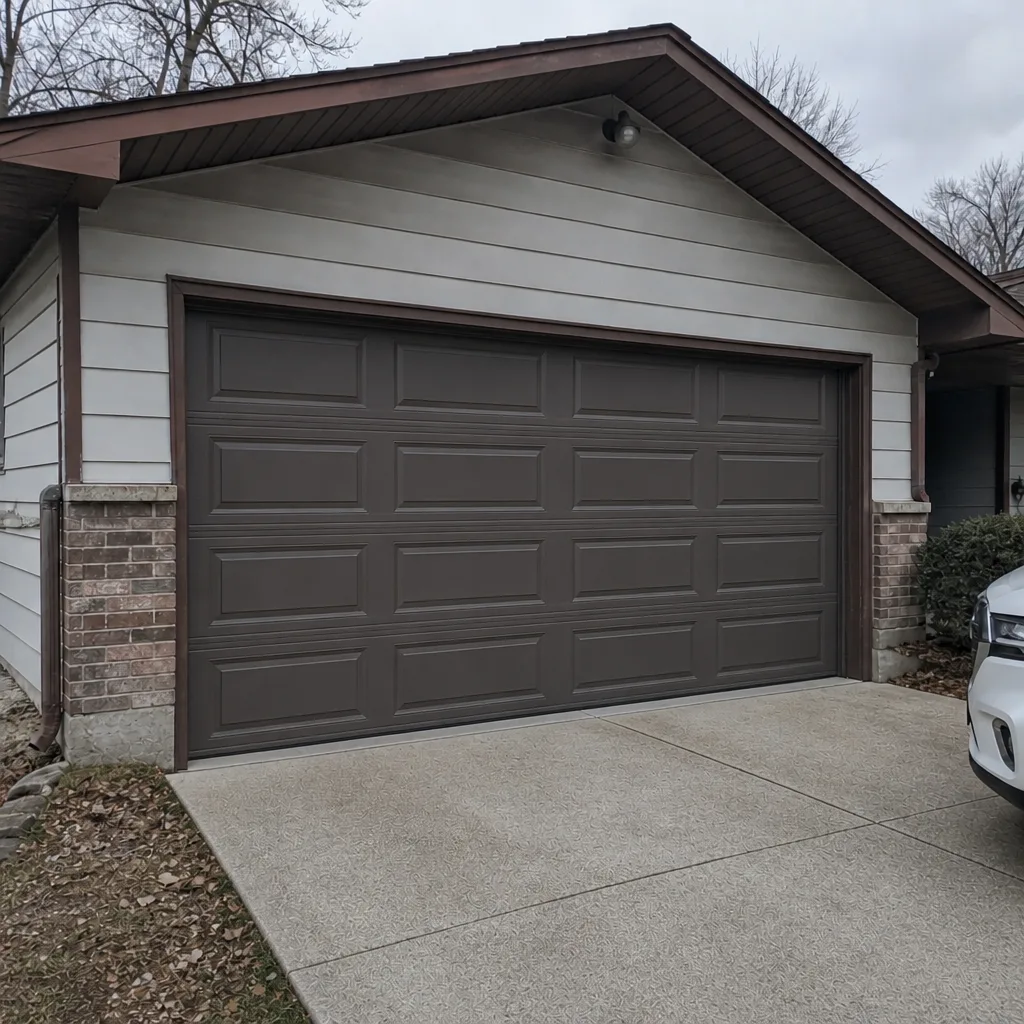
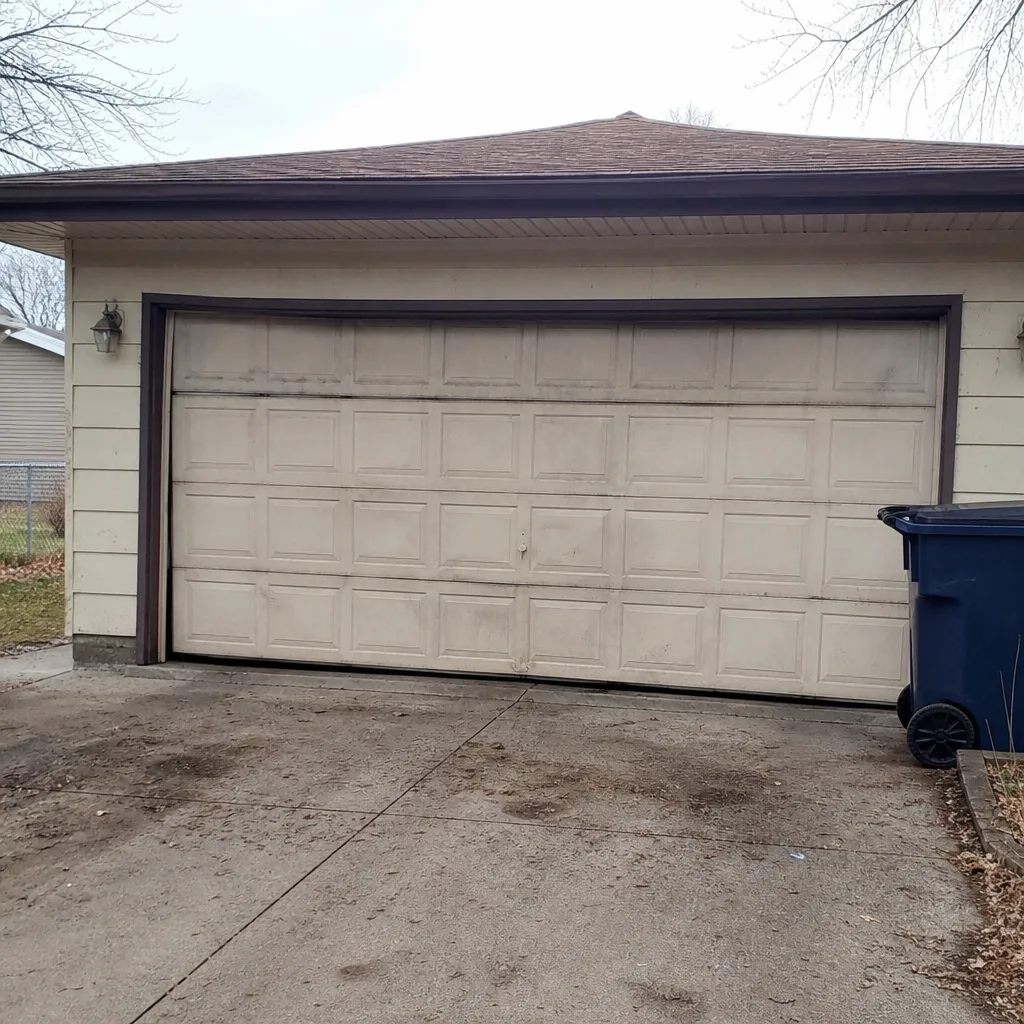
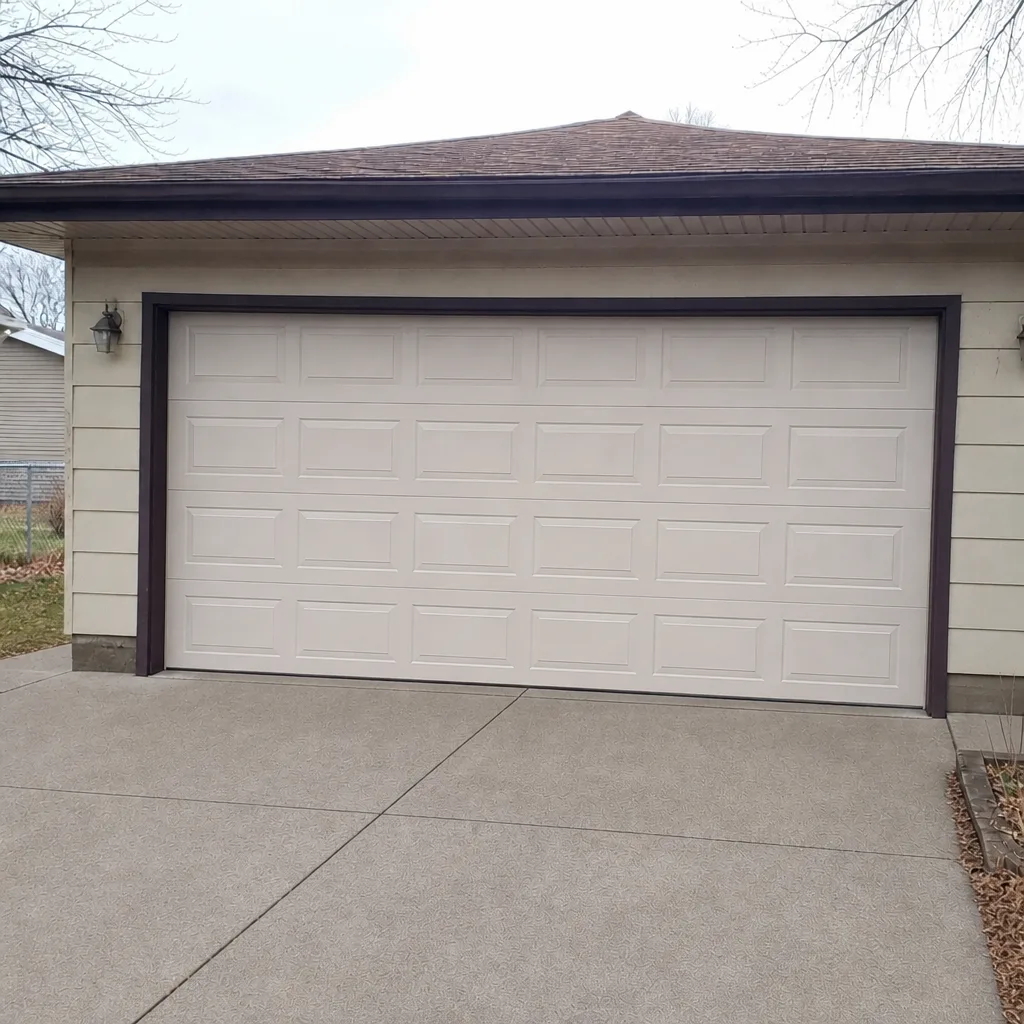
See the difference
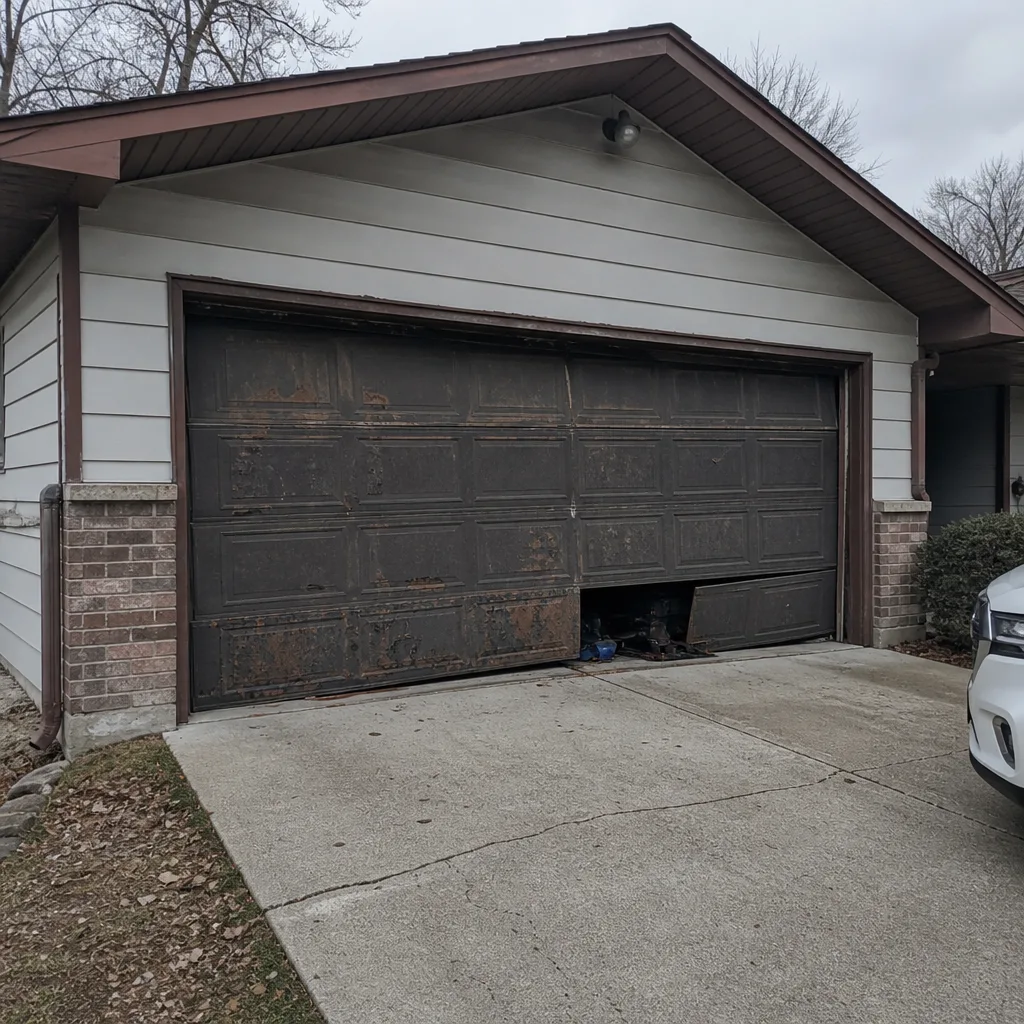 Before
 After
 Before
 After
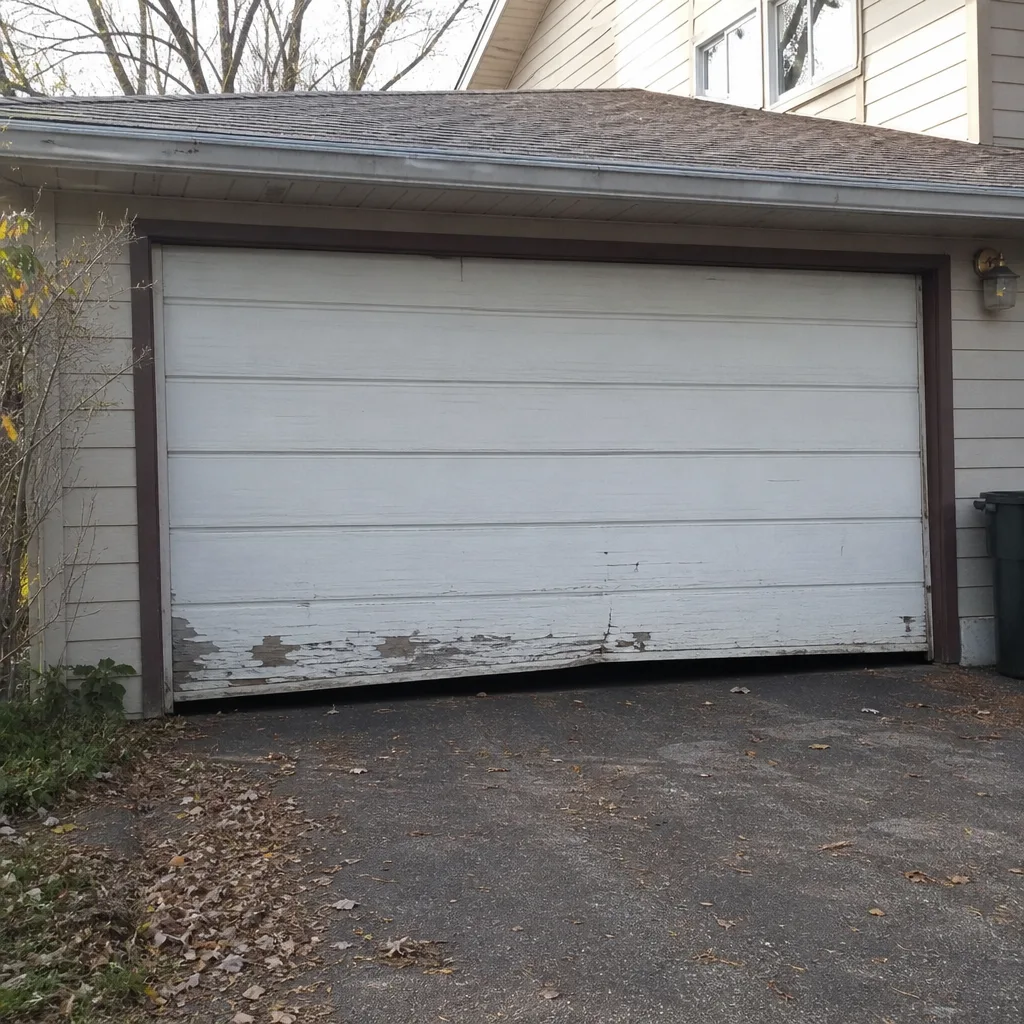 Before
 After
When to Call a Professional
Call a technician if any of the following show up during your checks: a spring that fails the balance test, a door that drops when you let go at any point in travel, a cable with visible fraying or kinks, a track that’s bent or a roller that’s popped out, an opener that runs but doesn’t move the door, or a door that won’t close all the way because the safety sensors are misaligned. Those are all situations a trained technician can diagnose and resolve in a single visit. Emergency service is part of our standard lineup, not an upsell – a broken spring that leaves a car trapped or a door stuck open is exactly what our emergency response is for. Burnsville Garage Door Repair Co offers free estimates in Burnsville – call (855) 560-7429. The price is quoted and agreed before any work starts, so the number on the estimate is the number you’ll see.
Frequently Asked Questions
Do a visual inspection and a balance test once a month, lubricate every three to six months, and schedule a deeper seasonal check before the first hard freeze and again after the spring thaw. Burnsville’s temperature swings mean your door works through a wide range, and monthly checks catch a failing spring or a loose hinge long before it becomes a stuck door. Call (855) 560-7429 if you’d like a professional set of eyes on it – estimates are free.
Yes, as long as you use a cold-rated silicone or lithium-complex product and you’re careful about nylon rollers. Get those wrong and the lubricant does more harm than good. Metal hinge points and roller stems are safe to lubricate; the roller body on a nylon roller usually shouldn’t be touched. If you’re unsure what type of roller you have, that’s a good question for a technician on a service call – call us and we’ll take a look.
Run the manual balance test. If the door drops when you let go at any point in travel, or if it gets noticeably harder to lift than it used to be, the spring is losing tension. A spring that’s about to fail may also show a visible gap at the coil, or dark dust around the spring. Don’t try to adjust it yourself – spring repair is one of our core specialties, and a technician has the right tooling and experience for the job. Call (855) 560-7429 for an estimate.
No. We quote and agree the price before any work starts. What you’re quoted in that written estimate is what you’ll be billed, assuming the scope of the job doesn’t change once we’re onsite. If anything different turns up during the repair, we’ll stop and talk it through with you before doing anything else. Call (855) 560-7429 for a free estimate.
Yes. Emergency garage door service is part of our standard offering, not a premium add-on. Stuck doors, broken springs, and openers that won’t respond are all within our emergency response range. Fast dispatch runs from 7am to 7pm; for a door that fails outside that, call and we’ll get you booked for the next available slot. Call (855) 560-7429 and we’ll get a technician routed to you.
We service LiftMaster, Chamberlain, Genie, Clopay, Amarr, Wayne Dalton, Craftsman, and Raynor – the eight brands most common on Burnsville homes. That’s practical: knowing the specific systems on the brand you already have means a faster diagnosis and fewer return visits because we already know what part the door needs. Call (855) 560-7429 to confirm we cover your model.
The Bottom Line
A good maintenance checklist is about knowing what you’re looking for, not just going through the motions. Lubricate with the right product for a Minnesota temperature range, run the balance test monthly, and stop to actually think about anything that looks like a change from last time. Keep spring work and cable work with a technician – those are the parts that fail suddenly and without warning. Line the big seasonal checks up with Burnsville’s pre-freeze window and spring thaw, and your door will spend most of its life running smoothly instead of leaving you with a car trapped in the garage. If you find something that isn’t right, call (855) 560-7429 for a free estimate. We’ll tell you what it actually needs, and we’ll tell you what it doesn’t.
Written by the team at Burnsville Garage Door Repair Co.