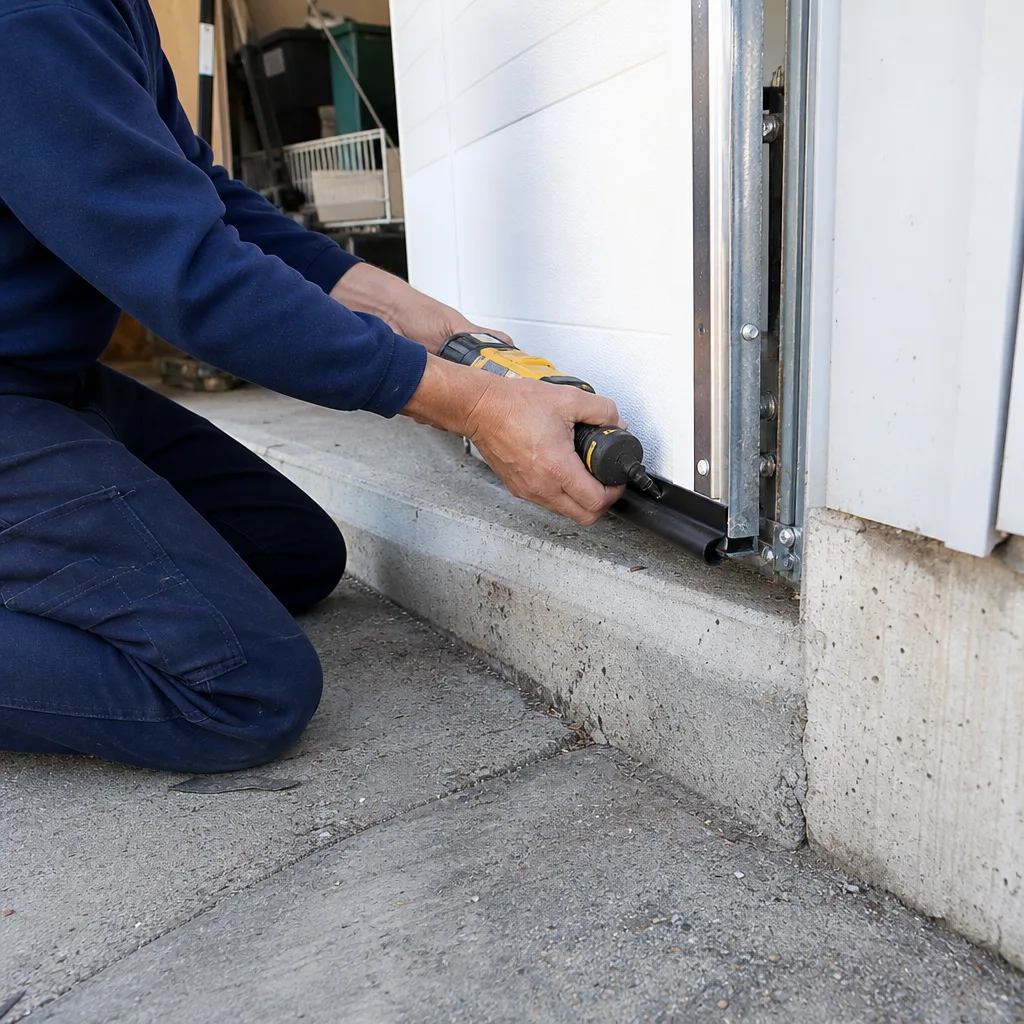
Last updated November 22, 2026
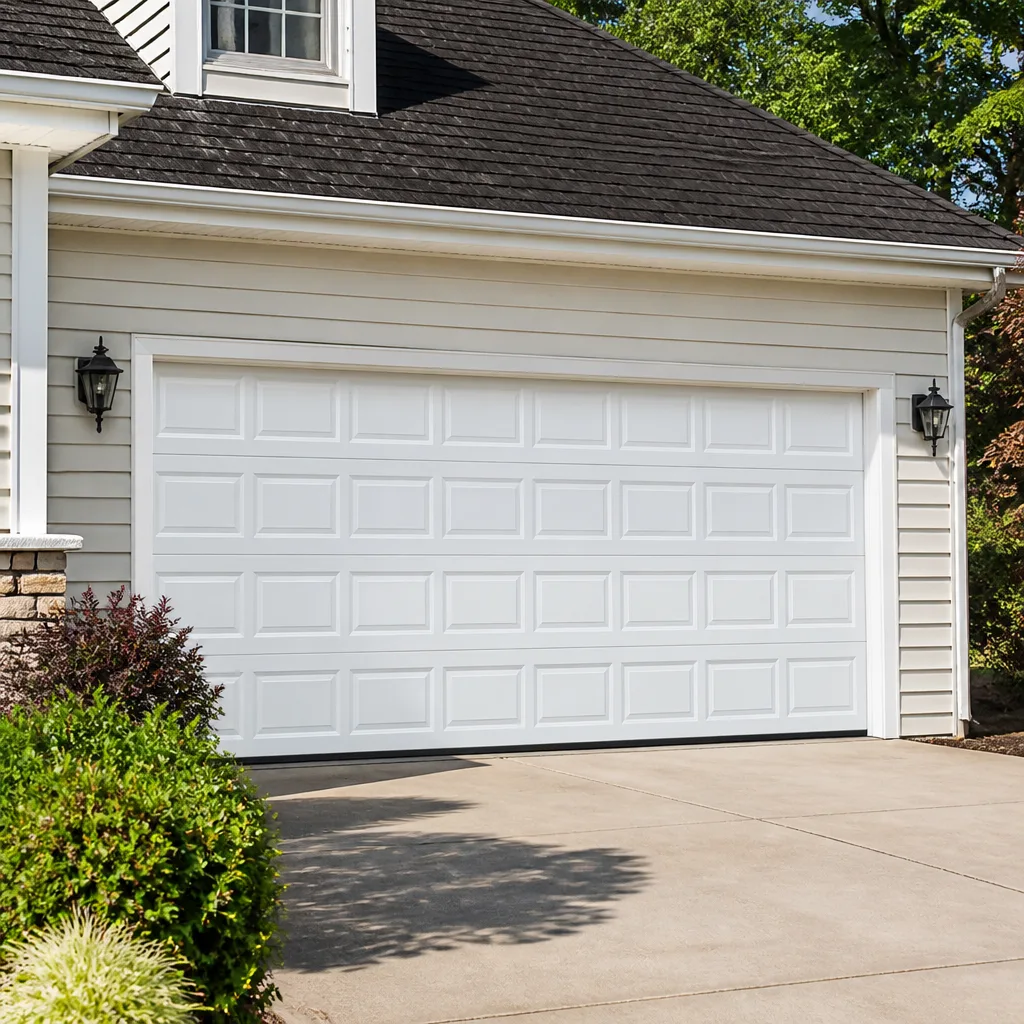 Raised-panel steel
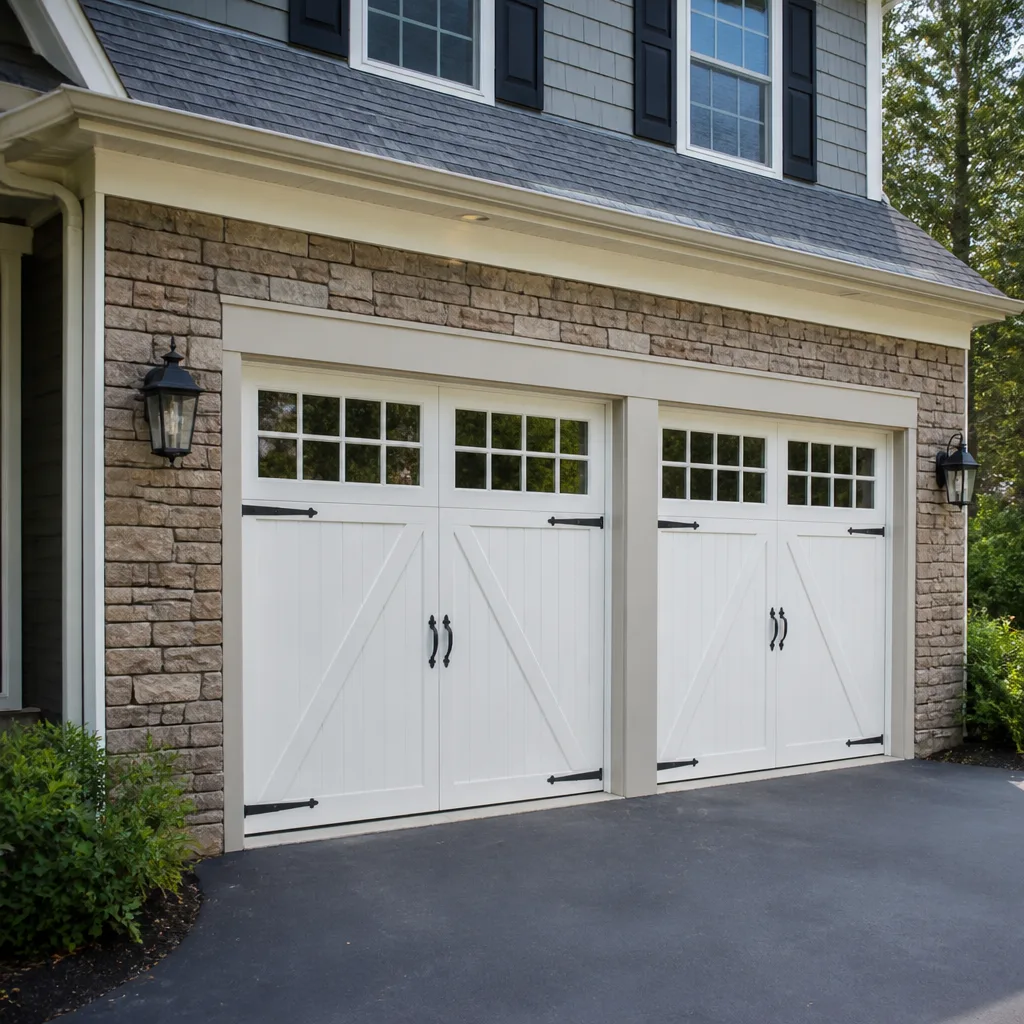 Carriage house
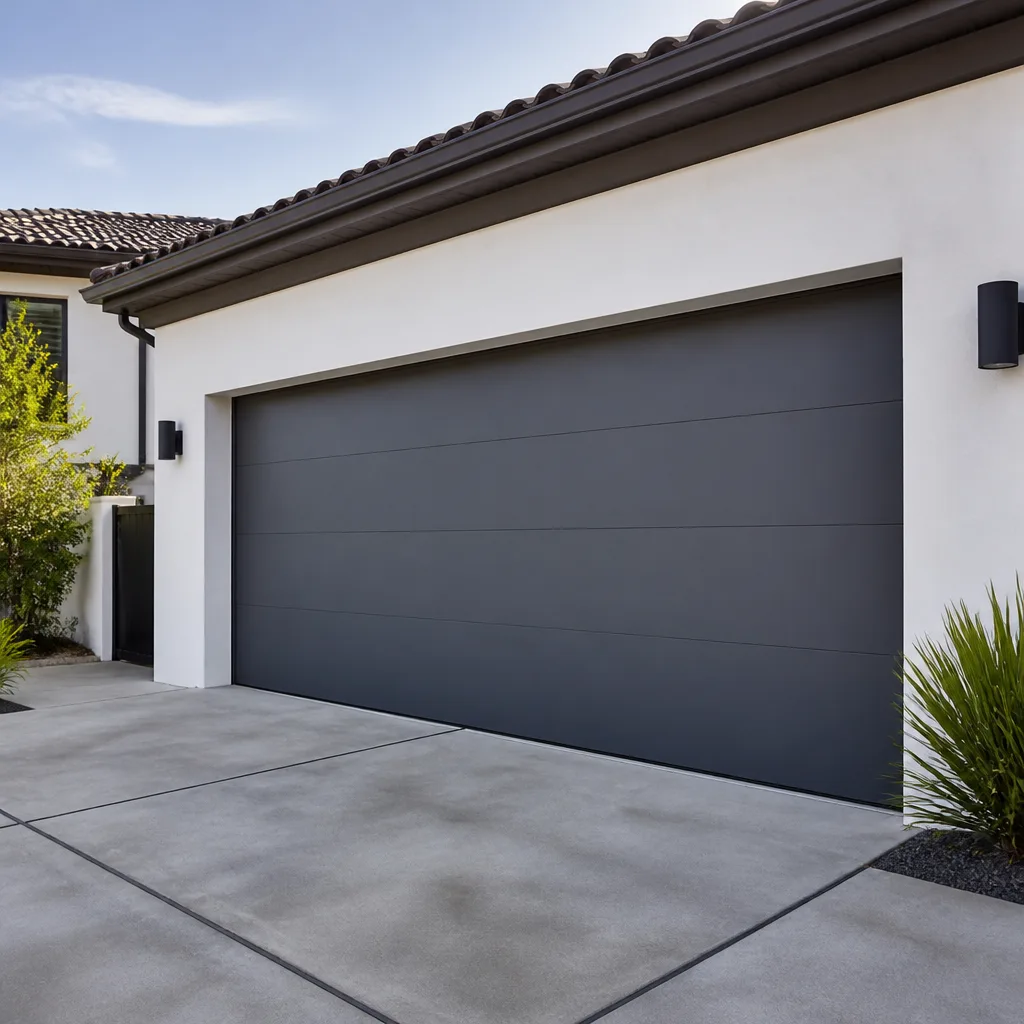 Modern flush
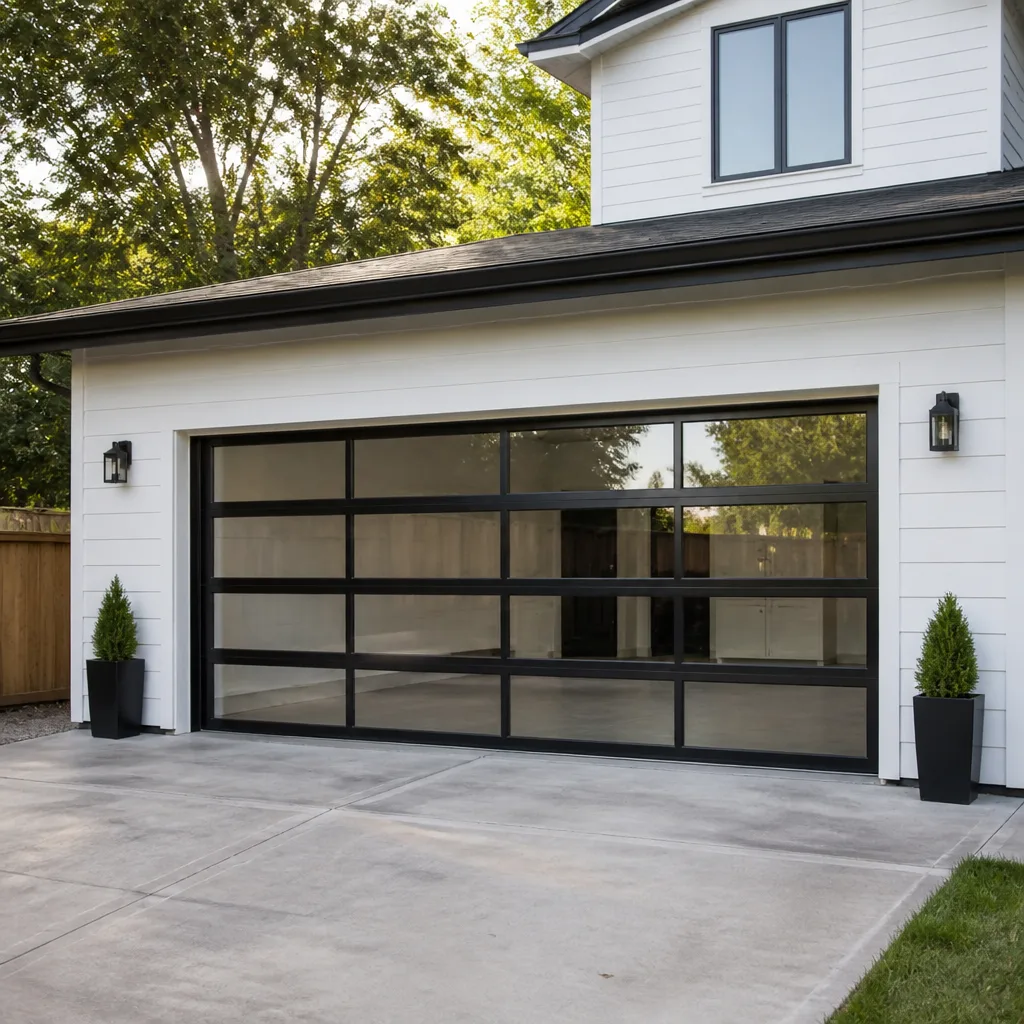 Full-view glass
 LiftMaster openers
 Chamberlain openers
Full 25-point door and opener safety check with every visit - springs, cables, rollers, tracks, and your LiftMaster or Chamberlain opener included
You get a price before we start. It does not change when the pro arrives.
Get your free estimateHow to Hire a Garage Door Contractor in Burnsville: A Step-by-Step Guide
A surprising number of companies advertising garage door work across the Twin Cities metro are general handyman operations that added “garage doors” to a service list one season and learned the trade on the customer’s door. It rarely shows up at the estimate. It shows up six weeks later, when a spring fails early, an opener won’t sync, or the door the installer adjusted never quite closes the same way twice. Hiring well in Burnsville comes down to asking sharper questions before anyone touches your door. This guide walks through how to tell a specialist from a generalist, what Minnesota actually requires, how to read a quote line by line, and the warranty and parts language worth walking away from.
Quick Answer
To hire a garage door contractor in Burnsville, confirm three things before you book: that the company works exclusively or primarily on garage doors, that the local professional performing the work is licensed and insured as Minnesota contractor rules require, and that the quote separates parts and labor with OEM parts named. Then check the spring, opener, and warranty language on the written estimate. A qualified specialist will answer all of it plainly and put the price in writing before any work starts.
Styles & brands we work with
- Raised-panel steel
- Carriage house
- Modern flush
- Full-view glass
- LiftMaster openers
- Chamberlain openers
Table of Contents
- Specialist vs. Generalist
- Minnesota Licensing and Insurance Requirements
- How to Read a Garage Door Quote
- Parts Sourcing: OEM vs. Aftermarket
- What a Legitimate Warranty Looks Like
- The Questions That Separate Professionals
- What’s Different About Garage Doors in Burnsville
- Common Mistakes to Avoid
Specialist vs. Generalist: How to Tell Which One You’re Calling
Nearly every garage door failure in Burnsville traces back to one of four things: a worn spring, a binding track, an opener that’s reached the end of its life, or a door that’s been misaligned by a bad install. A specialist sees those four so often that the diagnosis is quick and the fix is often the same visit. A generalist has to figure it out from scratch, and the parts for whatever system is in your garage may not be on the shelf anywhere local.
Signs you’re talking to a specialist
- Garage doors, openers, springs, and installation are the whole business, not a line item beside deck building and painting.
- They ask for the door brand and opener model before they quote. A Clopay, Amarr, or Wayne Dalton door pairs differently with each opener family, and the spring size depends on the door’s weight.
- They name specific brands without prompting: LiftMaster, Chamberlain, Genie, Clopay, Amarr, Wayne Dalton, Craftsman, Raynor.
- They’ll tell you the age of your opener matters, and explain what changes if it’s over a decade old.
- They bring a written, line-itemed estimate before starting work.
Signs you’re talking to a generalist
- “We do garage doors too” is the first thing said about the service.
- The quote is a single number with no parts breakdown.
- They can’t tell you whether the spring is torsion or extension, and don’t ask.
- The warranty is verbal or a phrase like “parts and labor included” with no time window.
- They promise a same-week install without ever measuring the door or checking the opening dimensions.
When you reach out to us at Burnsville Garage Door Repair Co, that’s all we do. We’re not a home-repair company with a garage door page added on, and that’s the distinction worth holding onto when you start comparing local options.
Minnesota Licensing and Insurance Requirements
Minnesota doesn’t issue a dedicated “garage door contractor” license class the way some states do. That catches homeowners off guard. Garage door work in Burnsville falls under the state’s general contractor and specialty contractor framework, and the person doing the work, or the company they work through, should carry appropriate licensure and insurance for the scope of the job.
What to verify before the work starts
- Business licensure. Ask for the business’s Minnesota license status. Most reputable companies will tell you directly or point you to the state lookup.
- Insurance. General liability insurance, at minimum. If the work is on an overhead door that could fall, liability coverage matters. Ask for a certificate of insurance and confirm the dates.
- Who’s performing the work. If the company subcontracts, ask. The local pro performing the work should be licensed and insured as their state requires.
- Workers’ compensation. Especially relevant if the company brings more than one technician.
What Minnesota code does require
Garage door installations in Burnsville need to meet Minnesota’s adoption of the International Residential Code, which addresses overhead door safety: spring systems must be designed for the door’s rated weight, doors need the correct counterbalance, and openers must include the safety reverse function. For permitted structural changes to the garage itself, only Burnsville’s own building department can tell you what’s needed; ask them directly before signing anything that involves altering the opening or framing.
What’s not a requirement, and shouldn’t be sold as one
No license number or certification ID should ever be presented as if it were issued by a specific state agency unless the company can point you to the issuing body. If someone leads with a badge and no explanation of who issues it, ask who the issuing body is. A qualified local professional will know.
How to Read a Garage Door Quote
A garage door quote should read like a parts list crossed with a work description: what’s being replaced, what brand of part, what labor is involved, and what the total is. If a quote is one number with no breakdown, that’s a yellow flag. If labor is folded into “shop supplies” or “materials,” that’s a red one.
Line items that should always appear
- Part description. “Torsion spring, matched pair, sized to door weight” is the useful version. “Springs” alone isn’t.
- Part brand. OEM or a named aftermarket equivalent. On opener work, the brand matters for compatibility.
- Labor cost. Separated from parts, or clearly combined with a documented scope.
- Disposal and haul-away. Old springs and door panels usually need removal; whether that’s included should be explicit.
- Adjustment and calibration. After spring or opener work, the door has to be rebalanced and the opener’s travel limits reset. That should be listed, not assumed.
- Warranty terms. On parts and on labor, with a time window for each.
Vague charges that signal trouble
- Any line item called “shop supplies,” “materials,” or “miscellaneous.”
- “Diagnostic” fees that are quoted before the problem is even described.
- A price that changes on the phone after a competitor’s number has been mentioned.
- Add-ons for things that are always part of the job: safety reverse testing, opener travel calibration, track alignment.
- “This week only” pricing on an install where the door hasn’t been measured.
The estimate should be finish-line, not starting-line
The written estimate you sign is the price. Good companies in Burnsville hold to it. If the actual scope turns out larger, they pause, explain why, and re-quote before continuing. A bill that arrives bigger than the quote, with no scope change, is not a normal job; it’s a bait estimate.
Reasonable price ranges for common work in Burnsville
Prices in this market depend on the door type, the model of your opener, and whether the job is a repair or a replacement. As ballpark estimates for scheduling, spring replacement on a single torsion spring typically runs in the $180 to $340 range, and matched pairs run roughly twice that. Spring replacement is one of the jobs where a qualified specialist is worth the effort; see our garage door spring repair page for what goes into sizing the spring to your specific door.
Parts Sourcing: OEM vs. Aftermarket and Why It Matters
On a lighting fixture or a door hinge, OEM vs. aftermarket barely matters. On a garage door opener, it can. Opener circuit boards, safety reversal sensors, and remote compatibility are all sized for the OEM specs. A third-party board that “works with LiftMaster” sometimes does, and sometimes drops the safety reverse feature or won’t pair with the wall console. When that happens in a Burnsville garage mid-winter, the homeowner is the one who notices first.
When OEM parts are worth the extra spend
- Opener circuit boards. Off-brand boards in older Genie and Chamberlain units are the most frequent source of repeat visits.
- Safety reverse sensors. These are a code requirement on new installs and directly affect whether the door will reverse on contact. OEM here is the safe move.
- Remote controls and keypads. Aftermarket remotes frequently lose pairing after a month or work with one opener but not another in a two-door garage.
- Drive gears on Craftsman and older Chamberlain units. The gear kit has to match the carrier dimensions, and aftermarket kits are notorious for early failure.
When aftermarket is fine
- Rollers, hinges, and bearings. These are commodity parts and any reputable brand is fine.
- Weatherstripping and bottom seals. On a Burnsville door facing a -20°F cold snap, the seal material matters more than the brand name.
- Cables on a torsion system, provided the correct rated strength is used. Cables are still one of the parts you never want to replace yourself.
Questions to ask about parts before the work is scheduled
- Which part is being replaced, and by what brand?
- Is this OEM or an aftermarket equivalent?
- If a non-OEM part is used, what changes about the warranty?
- Will the part be sourced for the specific door and opener brand, or is it a generic fit?
- Is there a possibility the current part’s failure damaged something else? A failed spring puts stress on the opener and the door’s balance; the source matters.
We work with the eight most common brands in Twin Cities homes: LiftMaster, Chamberlain, Genie, Clopay, Amarr, Wayne Dalton, Craftsman, and Raynor. That list matters because it’s the brands most likely to be under your roof, and knowing them means fewer return visits while we order a part we should have had. On opener work specifically, see garage door opener repair for what a proper diagnostic looks like.
What a Legitimate Warranty Looks Like
A real garage door warranty has four parts: what’s covered, for how long, who administers it, and what voids it. If any of those four is missing from the conversation before work starts, the warranty is decoration. Ask for it in writing, on the estimate.
The parts-and-labor split
Parts and labor almost always carry different warranties. A spring might be warranted for a set number of years, and labor for a shorter period. Ask both. Contractors who don’t distinguish between the two are usually promising nothing enforceable.
Language to avoid in a contract
- “Warranty void if serviced by anyone else.” This trap is common on openers: if the warranty requires all future service to come through the installer, you’re locked into that company for years. It’s a business contract, not a manufacturer warranty.
- Warranty conditioned on using specific parts the installer supplies. Manufacturers warrant their own parts; an installer adding their own exclusivity clause on top is adding a lock-in.
- Verbal-only warranty. Nothing verbal is enforceable.
- “Lifetime of the door” language with no definition of “lifetime.” Ask what the actual number of years is.
- Warranty that excludes “normal wear.” On a garage door, springs, rollers, and seals are wear items. The warranty needs to say what’s excluded and what’s not.
What legitimate warranty language usually includes
- Number of years on parts, stated as a number.
- Number of months (or years) on labor, stated as a number.
- Whether the warranty is transferable if the home is sold. In Burnsville, where homes change hands regularly, this actually matters at resale.
- What voids it: misuse, damage from impact, alterations by unqualified parties.
- Contact information for warranty claims, not just the sales number.
Installation warranty on a new door
A new door installation should carry the manufacturer’s warranty on the door and its parts, plus an installation warranty from the company that did the work. Ask for both in writing. On garage door repair work, the warranty on the repair itself should be plain: what was fixed, for how long, and by whom.
The Questions That Separate Professionals
Anyone can say they’re qualified. These questions will tell you in five minutes whether they are. Ask them by phone before booking, then again on the day of the visit. Watch for consistency.
Before the visit
- “Do you work on garage doors exclusively, or is it one of several services?” A generalist will hedge. A specialist will say garage doors are the business.
- “What opener brands do you diagnose?” Expect a real list. If they name only one or two, ask about the brand in your garage and listen to the answer.
- “Do you stock or can you source OEM parts for the brand I have?” Test it with the brand in your garage. On Craftsman and Raynor systems in particular, the answer should be specific.
- “What’s your written estimate process?” Anything less than “a written estimate before work” is a warning.
- “What warranty do you put in writing?” Push on parts vs. labor, and on how many years.
On the day of the visit
- “Walk me through what you found.” A good technician explains in plain language. If they can’t tell you why it failed, they may not know.
- “What are the part brands on this estimate?” If it’s not printed, ask for it in writing.
- “Is the price fixed, or can it change?” If the answer is “it can change,” ask what triggers a change and what notification you’ll get.
- “Will you test the safety reverse before you leave?” This is not optional on any opener work. A technician who waves it off is a technician who skipped the standard.
When the answer is “we’ll figure it out”
That’s a generalist answer. A specialist knows the door, the opener, and the spring rate before they arrive. They may still need to see the door to confirm, but they won’t be surprised by what they find.
What’s Different About Garage Doors in Burnsville
Burnsville winters are the hardest part of the job here. A door in a Burnsville home faces more cycles at sub-freezing temperatures than the same door in Georgia, and the parts that suffer are specific: torsion springs under constant cold-weather tension, weatherstripping that hardens and cracks, and openers whose lubricant thickens and eventually causes the motor to strain. Neighborhoods across the city, from the River Hills area to the Ridgeview and Orchard Gardens sections, show the same pattern. This is why local technicians check the spring rate and the seal every visit.
The door you own is probably one of a handful of common models
Most Burnsville homes built in the last thirty years carry a door from one of a few manufacturers: Clopay, Amarr, Wayne Dalton, Raynor. Knowing which one is under your opening lets a specialist call out the correct spring, weatherstrip, and panel sizing before arriving. It’s the practical reason a local technician is worth having instead of a metro-wide number that starts each visit from zero.
The spring question
Springs are the highest-failure-rate component of a garage door system and the most dangerous to replace. Torsion springs hold hundreds of pounds of tension. If one lets go while a homeowner is trying to replace it themselves, the injury is severe enough that hospitals see it. Our advice in Burnsville is consistent: leave the springs to a trained professional. This is one of the few places in a home where DIY stops being optional.
When the door fails on a Saturday
We’re closed on Saturday. If your door fails that day and your car is trapped or the home is unsecured, the fastest path is to call, get on the schedule, and get booked for Sunday. Emergency garage door work is a standard part of what we do, not an upsell tier.
What to do at the door between now and the appointment
- Don’t try to force the door. A door off its track or a spring that’s snapped should stay in place until a technician sees it.
- If the door is stuck open, keep the space clear and don’t let children or pets near the opening.
- If the opener runs but the door doesn’t move, disconnect the opener’s emergency release by pulling the cord. The door should then be moved by hand only if it moves freely; if it doesn’t, leave it.
- Snap photos of the spring, the opener label, and the door panel before the visit. Useful for the diagnostic call.
When to Call a Professional
Some garage door problems are adjustments; most are not. Call a professional if the door reverses on its own without contacting anything, if a spring has visibly snapped or come off its anchor, if the door is sagging on one side, if the opener runs with a grinding noise, if the safety reverse test fails, or if the opener’s remote stops working after the batteries are new and you’ve re-paired it. Any of these can cause a bigger failure if ignored, and a failed spring or a misaligned track is a physical hazard for anyone using the garage.
Springs in particular are not a homeowner job. A torsion spring under tension can seriously injure the person trying to release it, and getting the door back on its track is only part of the story; the door has to be rebalanced and recalibrated after.
Burnsville Garage Door Repair Co offers free estimates in Burnsville. Call (855) 560-7429 and we’ll talk through the problem, get the door looked at, and put a written price in front of you before any work starts.
See the difference
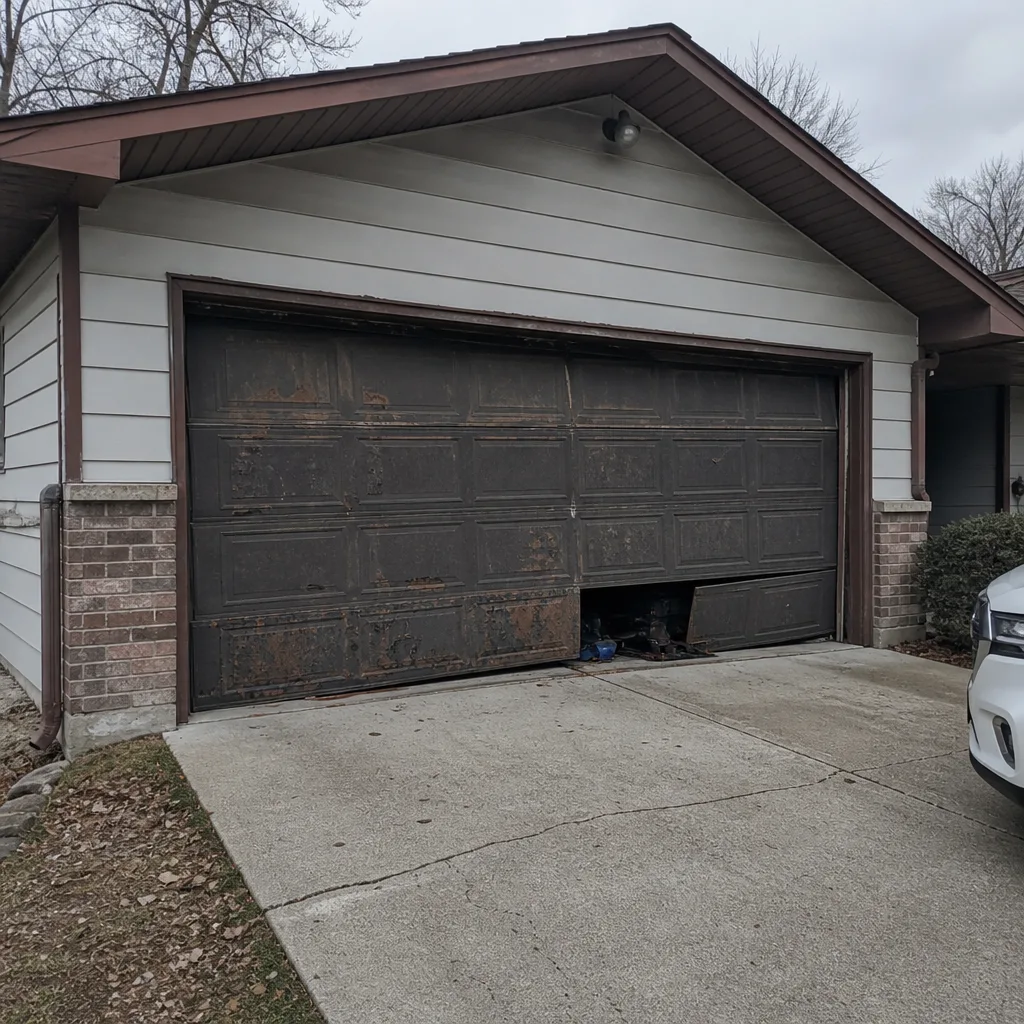 Before
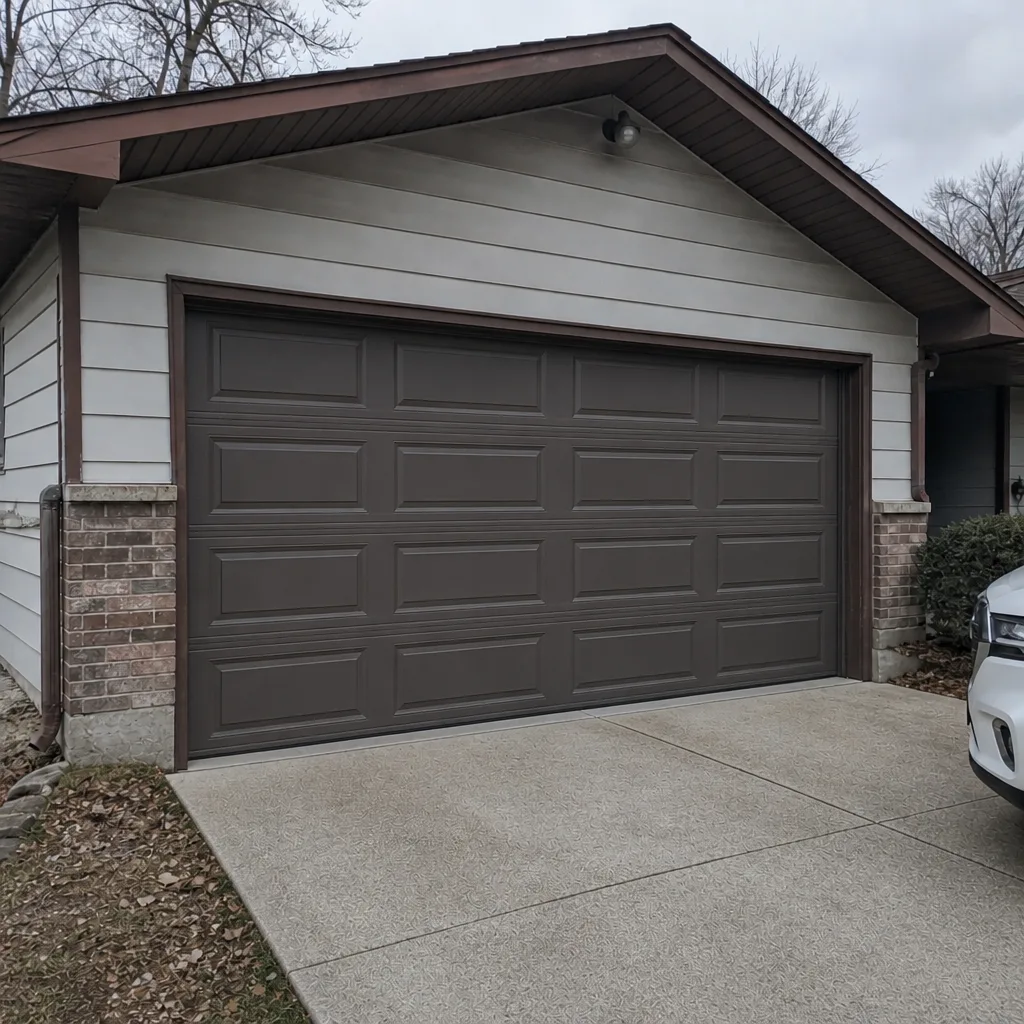 After
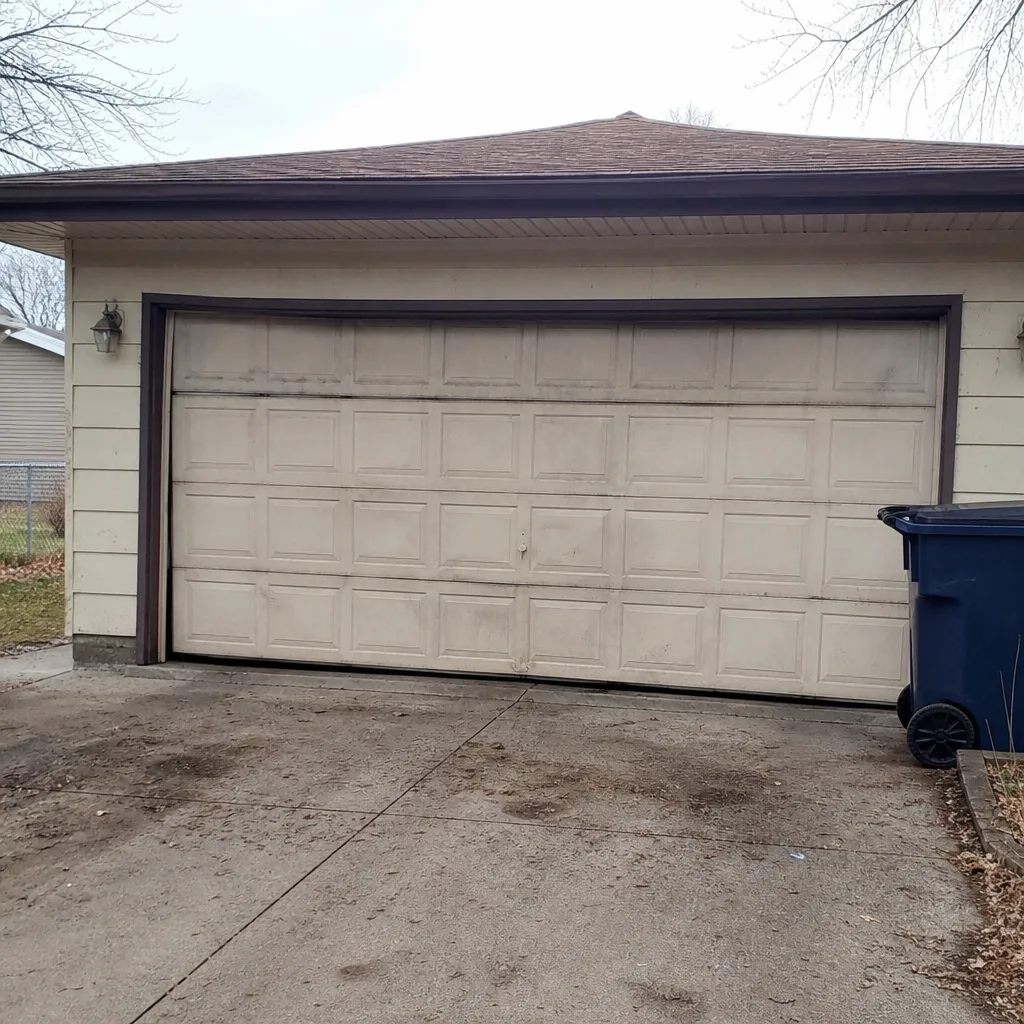 Before
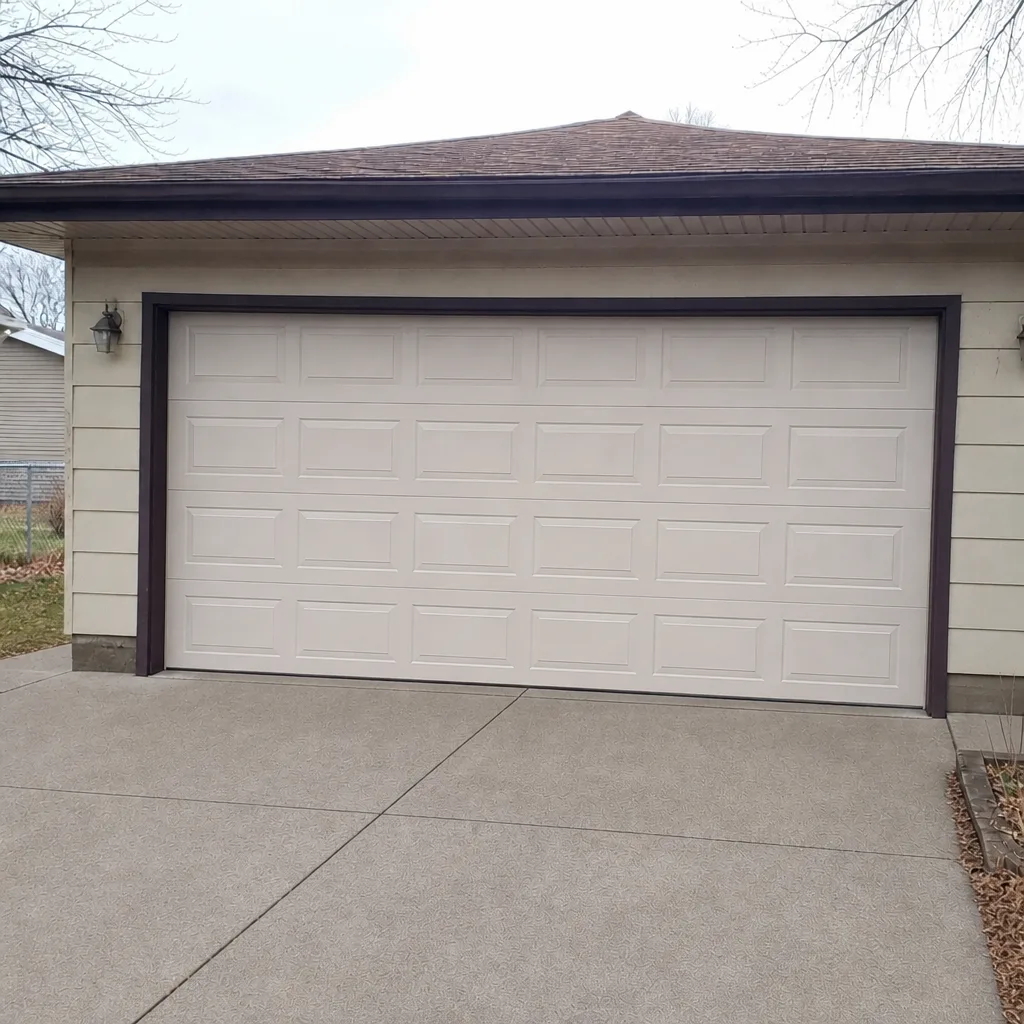 After
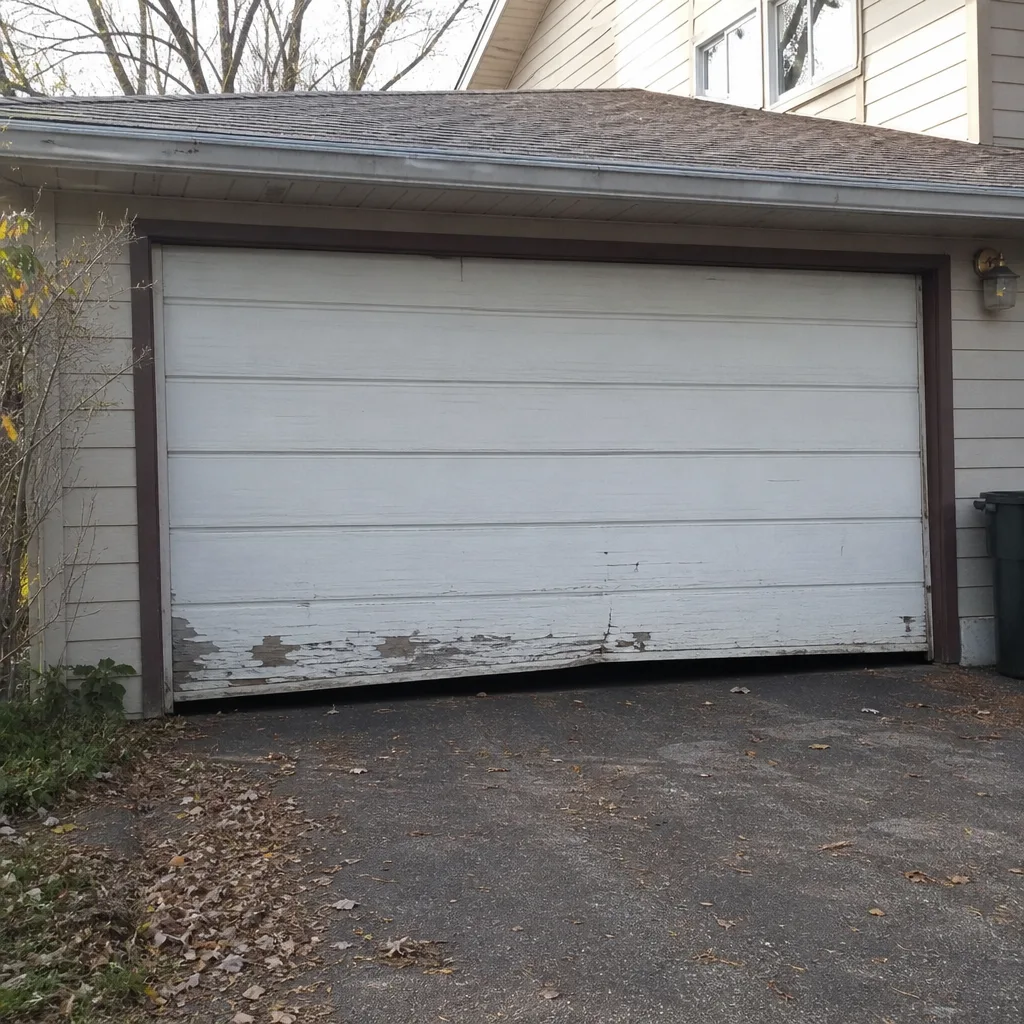 Before
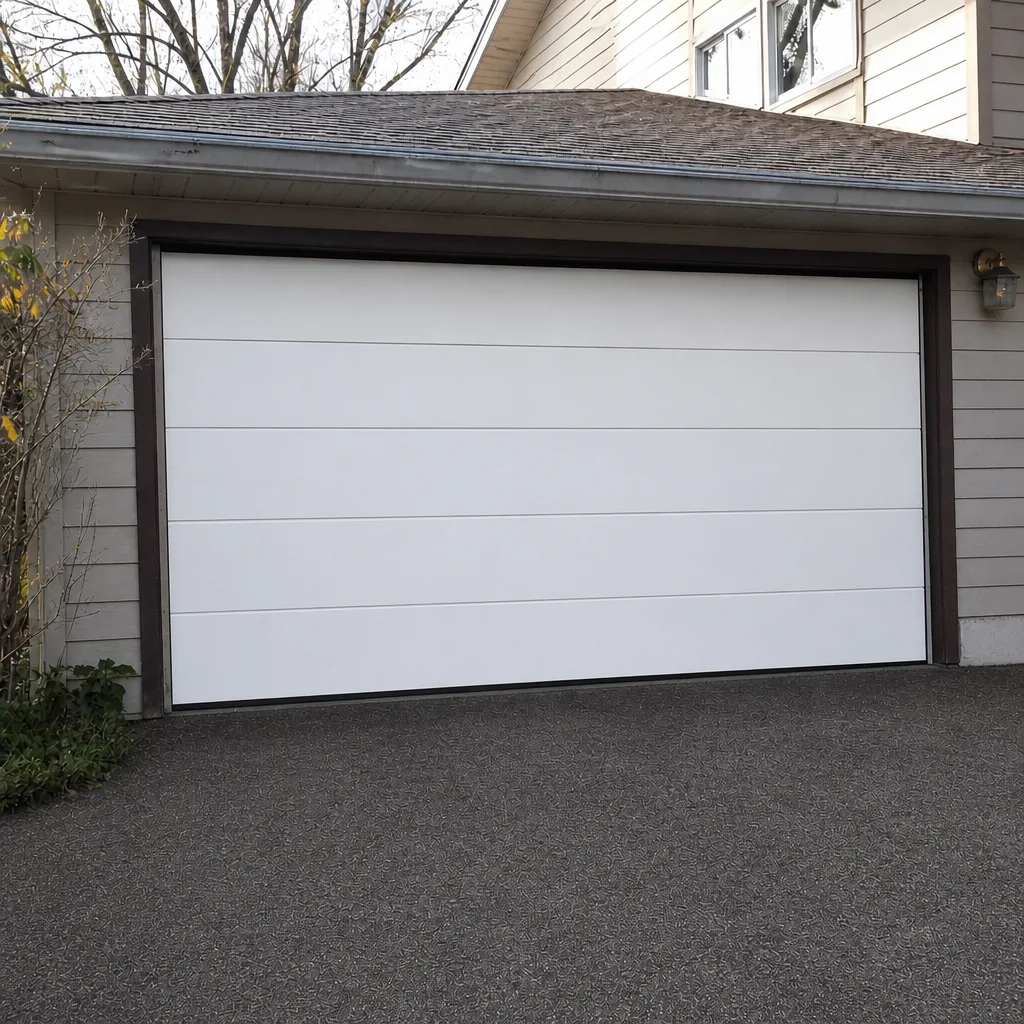 After
Frequently Asked Questions
Ask them directly what percentage of their work is garage doors, and name the brands on your own door. A specialist will answer with a specific list of brands they work on (LiftMaster, Chamberlain, Genie, Clopay, Amarr, Wayne Dalton, Craftsman, and Raynor are the most common in the metro), ask for your opener model, and quote a written estimate with parts and labor separated. A generalist will hedge, quote a round number, and often can’t name the model of the opener in your home.
Ask for the business’s Minnesota license status and a certificate of insurance showing general liability coverage with current dates. Minnesota doesn’t issue a garage-door-specific license class, so the relevant check is the general contractor or specialty contractor credentials plus liability insurance. The local professional performing the work should be licensed and insured as their state requires. If you’re ever unsure, ask who issues the credential someone shows you.
No. The written estimate you sign is the price. If the scope turns out larger than expected (for instance, a spring swap that reveals a damaged drum), a good technician pauses, explains what’s changed, and re-quotes before continuing. You shouldn’t see a bill larger than the estimate with no scope change. Call (855) 560-7429 for an exact quote.
A single torsion spring replacement in Burnsville typically falls in the $180 to $340 range, and a matched pair usually runs about twice that, since springs are replaced in pairs. Weather, door weight, and spring size all affect the quote. The written estimate is the final price, and the technician will confirm spring sizing before the work begins. See our spring repair service for what the visit involves.
For safety reverse sensors, circuits, and remotes, OEM is the safer choice. Aftermarket boards regularly drop the safety reverse feature or fail to pair with the wall console. For commodity parts like rollers, hinges, and weatherstripping, a reputable aftermarket brand is fine. Ask before the work starts which brand is being used, and make sure the warranty reflects whatever the parts source is.
We work on LiftMaster, Chamberlain, Genie, Clopay, Amarr, Wayne Dalton, Craftsman, and Raynor. That covers a large majority of the doors in Burnsville homes. If your brand isn’t on the list, call (855) 560-7429 and we’ll tell you honestly whether it’s something we handle.
Common Mistakes to Avoid
- Hiring on price alone. A quote that’s hundreds of dollars below the rest of the market is a signal, not a deal. Ask what’s left out of that lower number.
- Signing off on a quote without a parts breakdown. In Burnsville, a common mistake is accepting a single lump-sum number on a new door and later finding the opener and disposal separate. Line items up front prevent this.
- Replacing the opener when the springs are the problem. A door that can’t move freely makes an opener work harder; the opener may be fine and the springs may be the real failure. A specialist can tell the difference in a single visit.
- Choosing the “do everything” company. A handyman whose van says “home improvements” and who quotes springs over the phone is a red flag. Garage door work is a specialty, and the door you own will tell you whether they know it or not.
- Skipping the safety reverse test. Always confirm the technician tests the safety reverse function before leaving. If it isn’t tested, it isn’t right.
- Accepting a warranty that locks out other technicians. Manufacturer warranties exist. Installer warranties that require all future service through the installer are business arrangements, not safety guarantees. Read the language.
- Letting a snapped spring sit. A door with a failed spring puts stress on the other components and can drop when operated. Keeping it in the up position and closing the garage manually is safer than forcing the opener.
The Bottom Line
Hiring a garage door contractor in Burnsville comes down to three checks: whether the company is a specialist, whether the local pro is licensed and insured as Minnesota requires, and whether the written quote separates parts and labor with branded, sourced parts. Add an honest warranty and a written estimate before work starts, and you’ll avoid most of what goes wrong after the fact. Ask the brand questions, read the warranty language, and don’t sign a one-number quote. Call (855) 560-7429 for a free estimate from a company that works on garage doors every day, and we’ll walk through the door, the spring, and the opener with you before we quote.
Written by the team at Burnsville Garage Door Repair Co.